



How to Cultivate Inner Calm Through Mindful Living
Table of Contents
- Understanding Mindful Living
- The Science Behind Inner Calm
- Practical Strategies for Mindful Living
- Overcoming Obstacles on the Mindful Path
- Bringing Mindful Living into the Digital Age
- Closing Thoughts
Understanding Mindful Living
Mindful living isn’t some elusive state of zen or an empty mind. It’s about tuning into the present moment with curiosity and a pinch of kindness, free from harsh judgment.
“Mindful living is about observing each moment as it unfolds, allowing us to respond more thoughtfully rather than react impulsively.”
— Dr. Sarah Chen, Clinical Psychologist, NYU
This shift can usher in a profound calm, providing a buffer to the stresses that threaten to knock us off balance.
Rooted in ancient Buddhist meditation practices, mindful living transcends these origins, proving adaptable to diverse lifestyles. Back in 2019, a report from the American Psychological Association highlighted mindfulness’ powerful role in alleviating anxiety and depression, sharpening our focus, and amplifying our self-control.
The Science Behind Inner Calm
Let’s dive into the brain’s response to mindfulness. Research conducted at Massachusetts General Hospital—an affiliate of Harvard—suggests that mindfulness meditation can thicken gray matter, a region involved in memory and emotional regulation. Quite a perk, don’t you think? This neurological transformation might be why some find they’re handling stress with a newfound grace.
Consider Maya, 28, grappling with the tidal waves of a painful divorce. She felt scattered—pulled in too many directions at once. Yet, by leaning into mindful living, she gradually learned to recognize her emotions without letting them dictate her every reaction. Simple acts like mindful breathing and jotting down grateful thoughts became her lifeline, helping her reclaim herself amid the chaos.
Practical Strategies for Mindful Living
So, how do we cultivate this elusive inner peace? Below are some practical strategies to weave mindfulness into your routine.
- Embrace Mindful Breathing
Breathing? We do it every second without thought. Yet, intentional breathing can anchor you in the present. When the world’s pace leaves you breathless, try slowing down—inhale deeply and exhale completely, as if you’re coaxing gentleness into every cell. Just five minutes each morning can set a centered tone for the day.
- Be Present in Your Daily Activities
Everyday chores often blur into a mental autopilot zone. Eating, walking, even washing dishes—each moment is ripe for mindfulness. Focus on the flavors during your meal or really feel the earth beneath your feet as you walk. Such moments, peppered with attention, can feel unexpectedly profound.
- Practice Gratitude
Engage in gratitude meditation, and you’ll see a shift. According to a study in the Journal of Happiness Studies, acknowledging your blessings can boost happiness and ward off the gloom. Try scribbling down three things you’re thankful for each night; watch how it shifts your focus from woes to wins.
- Create a Mindful Space
Your environment influences your mindset. Designate a “mindfulness corner” at home. Maybe it’s a comfortable chair or a nook by the window bathed in warm light. Let this be your retreat for moments of silence and reflection, devoid of distractions.
Overcoming Obstacles on the Mindful Path
Starting isn’t always smooth. Resistance and frustration? Common companions on this journey. The key, as
“Mindfulness isn’t about attaining some mystic state; it’s acknowledging life’s ebbs and flows with kindness.”
— Dr. Emily Harris, Mindfulness Educator
suggests, is to be gentle on yourself. Mindfulness isn’t about attaining some mystic state; it’s acknowledging life’s ebbs and flows with kindness.
Life often derails the best-intentioned practice—emotions flare, schedules choke. On such days, remember the value of consistency, however small those steps may be. After all, each mindful moment enriches the tapestry of your inner calm.
Bringing Mindful Living into the Digital Age
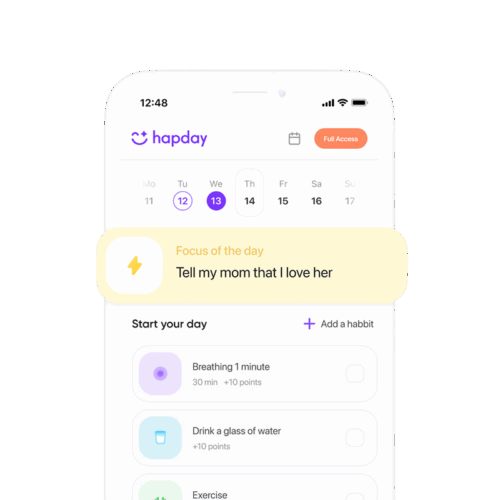
Technology—our modern double-edged sword. It can distract yet, used mindfully, enhance your practice. Apps like Hapday AI Life Coach offer guided sessions and wellness tracking, making mindfulness as accessible as your phone’s home screen.
Use your devices with intention. Boundaries like screen-time limits or digital breaks can help keep technology from usurping your daily narrative.
Key Takeaways
- Mindful living helps in observing the present moment, leading to thoughtful responses rather than impulsive reactions.
- Scientific research indicates mindfulness can enhance brain function related to memory and emotional regulation.
- Practical strategies include mindful breathing, focusing on daily activities, practicing gratitude, and creating a calm space at home.
- Obstacles such as resistance and distractions can be overcome with gentle persistence.
- Technology can support mindfulness practice if used thoughtfully with established boundaries.
Closing Thoughts
Treading this path towards inner calm is a courageous choice—one that redefines how you perceive and interact with the world. It’s not just about creating calendar space but space within your mind for being, not merely doing. Each mindful breath, bite, or moment edges you closer to tranquility, resilience, and richer life experiences.
As you continue onward, remember every moment is a page written in the book of mindfulness—an invitation to live with open hearts and full minds. May your journey towards inner calm not only quell the noise in your mind but expand your awareness and appreciation of life’s symphonies.
The Bottom Line
Embracing mindful living is not a destination but a journey. By integrating simple mindfulness practices into your daily life, you can cultivate a sense of inner calm that helps you navigate the chaos with grace and resilience. It’s about taking one breath at a time, cherishing small moments, and allowing yourself the grace to grow.
Join 1.5M+ people using Hapday’s AI-powered tools for better mental health, habits, and happiness. 90% of users report positive changes in 2 weeks.