

How to Cultivate Inner Calm Through Mindful Living
Table of Contents
- Understanding Inner Calm and Mindful Living
- The Science Behind Mindful Living
- Daily Practices to Cultivate Inner Calm
- The Emotional and Physical Benefits of Mindful Living
- Creating Your Mindful Living Routine
- Real-Life Transformations Through Mindful Living
- Expert Insights on Embracing Mindfulness
- Cultivating Inner Calm: A Pathway to a Balanced Life
- The Bottom Line
- References
Understanding Inner Calm and Mindful Living
So, what does it mean to genuinely cultivate inner calm? At its heart, it’s about finding a mental and emotional haven. Mindful living—an intentional focus on the now—offers a path to this state. It’s not about floating through life in a bubble of blissful ignorance but about choosing to pause and observe our thoughts and feelings without the burden of judgment. Anybody who has mastered this—a difficult feat, really—knows it’s like having an internal compass guiding you through the chaos.
The Science Behind Mindful Living
“Mindfulness is far from a fleeting trend. Studies show it can literally reshape our brain.”
— Dr. Sarah Chen, NYU
The American Psychological Association backs this claim, revealing that regular mindfulness practice amps up gray matter density in areas tied to memory and emotional management.
Meanwhile, a report from the Harvard Gazette highlights that those who practice mindfulness regularly boast about a 20% dip in stress levels. This practice kindles the “relaxation response,” quelling the stress-induced urge to run or fight and instead invoking a calm parade of lowered heart rates and enhanced well-being overall.
Daily Practices to Cultivate Inner Calm
Knowing the benefits of mindfulness is one thing, but weaving it into your daily fabric? That’s the true challenge.
- Start with Centering Breaths
Your breath—ever so present yet often ignored—is a powerful anchor. Next time you’re swamped, give this a whirl: breathe in deeply to the count of four, hold for four, and release for six. Instantly, the parasympathetic system kicks in, inviting calm. Dr. Mark Reese from Stanford calls conscious breathing a “mental reset button.” Pausing with intent is like pressing restart. - Mindful Journaling
Maya, 28, found solace in journaling post-divorce. This practice lit up pathways to clarity when life felt like a multi-car pileup. Dedicate a mere ten minutes a day to unfurl your thoughts onto paper. No Shakespearean prose required—just let it flow. By expressing unfiltered emotion, you might unveil hidden triggers or patterns. Handy, right? - Nature Walks and Grounding
Take a break. Step outside. Feel the earth beneath your feet. Nature’s innate tranquillity is almost medicinal. Saunter through a park, lose yourself in leaves’ whispers, let the breeze brush past you. The National Institutes of Health, back in a 2019 study, revealed that two hours weekly in nature correlates with profound health perks and an upswing in well-being. Nature, it seems, might just be the cure we never knew we needed. - Digital Detox
Hyper-connectivity—can be suffocating. Ever feel like your phone controls you? Try a “digital detox”—just one day a week. Say no to notifications and screen overload. Instead, reconnect with the tangible world. You’ll likely find a refreshed sense of clarity on the other side. - Meditation as a Calming Ritual
Meditation: it sounds daunting, but even a mere five minutes daily can do wonders. Get into the groove with the aid of apps or online guides; you’ll quickly see meditation is both a tranquil escape and a long-lasting reservoir of courage. As noted in a 2014 study published by JAMA, meditation can markedly ease anxiety, melancholy, and even physical pain.
The Emotional and Physical Benefits of Mindful Living
Mindfulness doesn’t only feel good—it’s a boon for physical health too. The Mayo Clinic connects chronic stress to leading causes of death, including heart disease. Easing stress via mindfulness strengthens immunity, improves slumber, and decreases blood pressure levels. It’s much more than just engaging in a fleeting wellness trend.
Creating Your Mindful Living Routine
Consistency is key—a journey not of perfection, but perseverance. Start small: try a five-minute morning meditation, savor a tech-free lunch, or jot down a few reflections before bed. These simple acts, over time, serve as your personal bastion against life’s tempest.
Real-Life Transformations Through Mindful Living
Meet Jake, a 35-year-old software engineer. As anxiety repeatedly knocked him off-kilter, he adopted mindfulness. From a modest two-minute meditation to a 15-minute morning ritual, Jake saw his anxiety levels dramatically drop, transforming his presence both at work and at home—with significant boosts to his relationships.
Expert Insights on Embracing Mindfulness
“Mindful living isn’t about wiping stress out—it’s reshaping our connection with it. Approaching life’s tapestry with openness rewires our courage.”
— Dr. Linda Morales, Harvard
Cultivating Inner Calm: A Pathway to a Balanced Life
Within the world’s cacophony, finding peace might seem daunting, but with each mindful breath, you edge closer to that internal sanctuary. Integrating these practices into your life arms you with the grace to handle life’s upheavals.
When your mind feels akin to a crowded railway station, remember your well of peace lies within. It’s accessible through mindful living. Anchor yourself in the present and discover that inner calm is not a faraway dream—it’s just a moment away.
Key Takeaways
- Mindful living allows you to cultivate inner calm amidst life’s chaos.
- Practices such as centering breaths and mindful journaling can be easily integrated into daily life.
- The benefits of mindfulness extend to both emotional well-being and physical health.
- Consistency in mindfulness practices leads to lasting change and emotional resilience.
The Bottom Line
Mindful living empowers you to reshape your relationship with stress and embrace tranquility in your daily life. By incorporating simple practices, you can cultivate a peaceful inner world, making room for joy, clarity, and resilience.
References
- American Psychological Association. “Mindfulness and Meditation.”
- Harvard Gazette. “The Benefits of Mindfulness Practice.”
- JAMA Internal Medicine. “Effects of Meditation Programs on Stress.”
- Mayo Clinic. “Chronic stress: Focusing on solutions.”
- National Institutes of Health. “Nature and Wellbeing.”
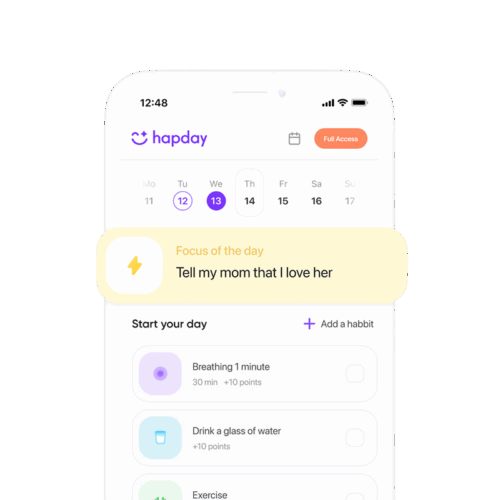
Join 1.5M+ people using Hapday’s AI-powered tools for better mental health, habits, and happiness. 90% of users report positive changes in 2 weeks.