



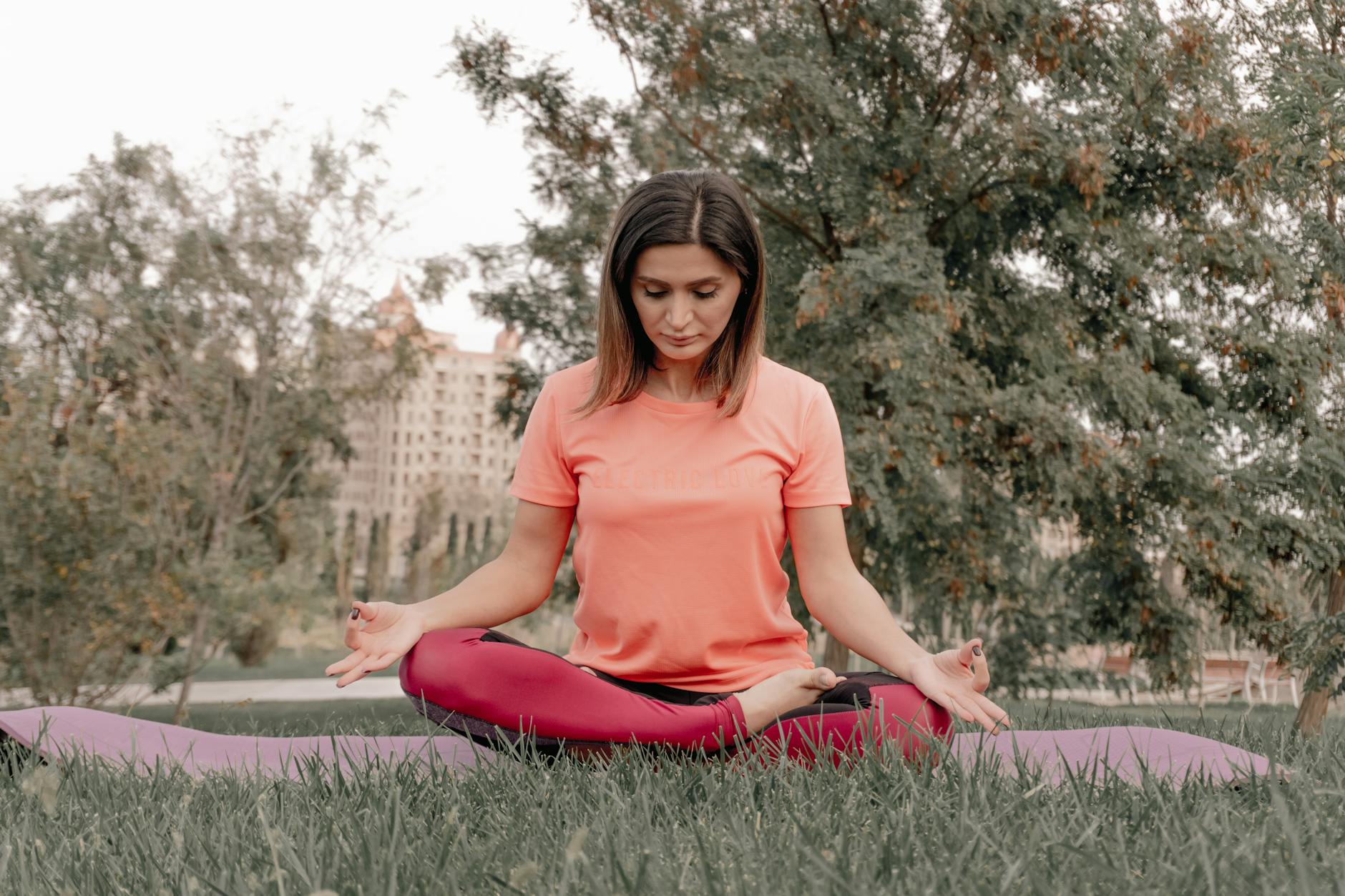
Finding Mindfulness: Techniques for Everyday Calm
Table of Contents
- Understanding Mindfulness and Its Importance
- Finding Calm Through Breath
- Embrace the Present with Mindful Walking
- Taming the Mind with a Body Scan
- Mindfulness and Gratitude Journals
- Guided Mindfulness Meditation
- The Art of Letting Go with Observational Practices
- Cultivating Mindful Eating Habits
- Embracing Mindful Technology Use
- Connecting to Nature for Mindfulness
- The Bottom Line
On a brisk autumn morning, Lily discovered herself caught—yet again—in that hazy loop of stress and never-ending tasks that many of us know too well. There she sat, coffee in hand, its warmth a feeble shield against the relentless tide of thoughts—a to-do list that seemed to shout, not whisper, with urgency. She’d heard about mindfulness, but to her, it felt elusive—more like an abstract concept than a tangible practice. What would it take, she wondered, to snatch even a fleeting moment of peace from the chaos that filled her life?
If you’ve ever felt like Lily, you’re definitely not alone. In fact, back in 2021, a survey by the American Psychological Association suggested that about 84% of millennials and Gen Z adults regularly deal with stress or anxiety. For many, mindfulness has become less of a luxury and more of a lifeline.
Understanding Mindfulness and Its Importance
Before we dive into the techniques, why does mindfulness matter anyway?
“Mindfulness helps us tap into our inner world, allowing us to observe, without judgment, the natural rhythm of our thoughts and emotions. It builds resilience—it’s how we soften stress’s sting.”
— Dr. Sarah Cheng, Clinical Psychologist at NYU
Research backs Dr. Cheng’s wisdom. As highlighted by Harvard Health, cultivating mindfulness can indeed reduce stress, improve emotional control, and sharpen our mental focus. By making mindfulness part of our day-to-day life, we shift from simply reacting to everything around us to embracing a state of tranquil awareness.
Finding Calm Through Breath
Our breath: it’s always with us and can be our anchor in stormy seas of emotion. Take Maya’s story—28 and navigating the emotional terrain of divorce. “Whenever anxiety seized me, I found my peace in breathing,” she shares.
The magic of breath lies in science. Deep breaths activate the parasympathetic nervous system—think of it as the body’s brake pedal, dimming down stress responses by lowering cortisol levels. Seeking calm? Find a quiet spot, breathe deeply through your nose, hold briefly, and exhale slowly through your mouth. Let this rhythm be your refuge.
Embrace the Present with Mindful Walking
Transform what seems mundane into something extraordinary. Ravi, a software developer swamped by work, found that mindful walking provided clarity. “Feeling each footstep and hearing the leaves rustle grounded me,” he admits.
Mindful walking means immersing yourself in every step, every sensation—is it chilly? Is the ground firm or soft? This simple practice roots you in the present, tethering your thoughts to reality. Next time you walk, take it slow, feel the ground beneath, and notice the world unfold around you.
Taming the Mind with a Body Scan
Learning to be in tune with our bodies can stabilize a frantic mind. Consider Amanda, a burnout-ridden graphic designer, who discovered body scans in therapy. “It was like finding my way back home to my own body,” she confides.
A body scan involves quietly acknowledging each part of your body, moving in a gentle mental sweep from toes to head. This practice not only fosters mindfulness but, as studies from the American Psychological Association suggest, can be beneficial in managing anxiety and depression. Try it: lie down, breathe, respect each tense muscle, and discover areas you didn’t notice before.
Mindfulness and Gratitude Journals
Journaling can transform nights into serene reflections. For Alex, jotting down moments of gratitude became a sacred routine. “It was a lantern in the gloom of daily stress,” Alex notes.
Writing down thoughts or scattered feelings helps make sense of tangled emotions. Pick up your pen each evening, jot down three things—big, small, or in between—you’re grateful for. You’ll find this daily practice grows into a reflective pause, something of a meditation, celebrating progress.
Guided Mindfulness Meditation
What if you had a guide through your mental fog? Lina, a marketing executive, discovered guidance in meditation apps during early pandemic days. “It felt like an anchor amidst a storm,” she recalls, noting the comfort it provided.
Guided meditations often feature soothing voices that walk you through calming practices, reducing anxiety and stress, according to the National Institutes of Health. Plenty of services, like those provided by Hapday AI Life Coach, offer tailored sessions that support different needs, from focus sharpening to stress busting.
The Art of Letting Go with Observational Practices
When Jason, a lawyer, wrestled with intrusive thoughts, he learned the power of simply observing them. “Realizing I didn’t have to react was revolutionary,” he reveals.
Here, the practice is straightforward: sit comfortably, watch your thoughts amble by like clouds drifting in the sky. Don’t engage—just observe. This detachment helps lessen their grip; think of it as learning to step back, as if you’re the impartial audience of your inner play.
Cultivating Mindful Eating Habits
Turn meals into moments of mindful indulgence. Taylor, a college student, rethought her meals by rediscovering each bite. “Every bite has a story, and now, I savor that tale,” she shares.
Mindful eating, centered around full sensory engagement, can improve digestion and prevent overeating, a fact noted by the Mayo Clinic. Savor each morsel, chew deliberately, and relish the flavors. It’s more than eating; it’s connecting.
Embracing Mindful Technology Use
Tech—that double-edged sword we can’t live without. Madelyn found solace from social media-driven anxiety by controlling her tech habits. “I set healthy boundaries, transforming tech into a tool, not a trap,” she mentions.
Tech can nurture mindfulness if used wisely. Choose apps that stimulate reflection rather than endless scrolling. Remember, tech is yours to command; it needn’t be a tyrant.
Connecting to Nature for Mindfulness
Human beings have long found peace in nature; its rhythm is a balm. Daniel, an urban planner, rekindled dormant connections with weekend hikes. “Nature became my sanctuary,” he reflects, his words echoing the calming effect nature holds.
Simply being outside, engaging with nature’s sensory details—sound, scent, sights—can alleviate stress. Studies from Stanford University affirm this calming power. Take a walk in the park or breathe deeply under a canopy of trees—let nature’s simplicity pull you into the here and now.
Key Takeaways
- Mindfulness is a powerful tool to help manage stress and anxiety.
- Simple practices like deep breathing, mindful walking, and journaling enhance emotional well-being.
- Engaging with nature is beneficial for mental clarity and relaxation.
- Mindfulness can be applied in daily technology use to foster healthier habits.
- The journey to mindfulness is ongoing and requires practice.
The Bottom Line
In a world ever-demanding of our attention, finding peace can seem daunting. Yet through mindfulness practices like breathing, walking, or gratitude journaling, peace isn’t just attainable; it’s discoverable. Remember, the path isn’t straight or easy—it meanders gently, much like life itself.
These techniques, when woven into your routine, help cultivate peace—even amidst life’s unpredictability. As for the journey? It’s ongoing, less a destination and more an unhurried unfolding.
Explore mindfulness more with Hapday AI Life Coach, an app providing support and guidance tailored to your needs. And as science mingles with practice, let mindfulness enrich your existence, nurturing connections and resilience. Stress, anxiety—these are but waves. Mindfulness is your still water beneath.
Join 1.5M+ people using Hapday’s AI-powered tools for better mental health, habits, and happiness. 90% of users report positive changes in 2 weeks.