



How to Fall Asleep Fast with Mindfulness for Beginners
You know the scene: the room is quiet, the lamp is off, and still your mind refuses to turn down the volume. Tomorrow’s calendar, an offhand comment from lunch, the email you haven’t sent — they crowd the dark. I’ve watched the clock drift past midnight more times than I care to admit, fully tired and oddly alert. If any of this sounds familiar, you’re in good company. And yes, there’s a kinder way to meet the night.
Table of Contents
Key Takeaways
- Mindfulness reduces arousal and racing thoughts, creating conditions where sleep can naturally emerge.
- A short, consistent wind‑down routine and gentle breathwork are more effective than forcing sleep.
- Body scans, noting thoughts, and compassionate self‑talk help interrupt rumination at bedtime.
- Predictable cues (dim lights, phone curfew, cooler room) train the brain to associate bed with rest.
- Two sincere minutes practiced consistently beats long, sporadic sessions for beginners.
Why nights get noisy: the stressed brain and sleep
When stress runs high, the nervous system tilts toward defense. It’s the old biology — a subtle rise in heart rate, thoughts looping in tight circles, muscles anticipating a problem. And the bed? It becomes one more task to manage. The Centers for Disease Control and Prevention has put numbers on what many of us feel: roughly one in three U.S. adults sleeps less than seven hours. That shortfall isn’t just inconvenient; it’s tied to higher risks of chronic illness and predictable daytime fog. I’ve told myself “just relax” in the past. It never helped.
Here’s where the science turns hopeful. Mindfulness can cue the body toward safety. Slow exhalations speak to the vagus nerve; steady attention lowers cognitive noise; a kinder stance toward one’s own experience ends the late‑night tug‑of‑war.
What mindfulness actually does to a restless brain
Mindfulness is attention training with compassion baked in. It teaches you to rest where your body is — breath, sound, weight — rather than where worries tug. As attention settles, the body receives consistent “you are safe” signals. Research summaries from Harvard Health and the NIH link mindfulness practices with reduced anxiety and, for some, better sleep quality. You do not need a monastic retreat to start; a few minutes, repeated, change the pattern. I’ve seen readers succeed with five minutes a night. It’s less about length, more about sincerity.
“Mindfulness doesn’t force sleep; it creates the conditions where sleep can find you. When we drop the struggle and meet the body with steady attention, the arousal system starts to downshift.”
— Dr. Sarah Chen, Clinical Psychologist, NYU
I would argue that “dropping the struggle” is the skill modern life trains out of us — and the one worth reclaiming.
How to fall asleep fast with mindfulness for beginners: the gentle path
Think of this practice as laying a small bridge from wakefulness to rest — board by board, not a leap. The aim isn’t to “achieve sleep,” which adds pressure, but to be present enough that sleep is the next reasonable thing.
Start with why it works:
- Predictable wind‑down routines preview what comes next. The brain likes patterns; consistency lowers the uncertainty that often sparks racing thoughts.
- Dim light and less stimulation coax melatonin into play. Lower light is a quiet nudge rather than a command.
- Slow, rhythmic breathing and a body scan trigger the relaxation response — the body’s inbuilt brake pedal for stress.
A 30‑minute wind‑down that welcomes sleep
- Park your phone. About 30–60 minutes before bed, put the device to bed somewhere outside your room. This isn’t punishment; it’s protection from blue light and from the mental hooks that keep the mind solving problems at 11:47 p.m.
- Turn the dial down. Dim the lights. Set the room between 60–67°F if that suits you. A small drop in core body temperature is one of sleep’s natural signals; a cooler room helps the body make that move.
- The three‑minute arrival. Sit at the edge of the bed or in a chair. Eyes closed or soft.
- Notice where your body meets support.
- Name three sensations: “warm,” “heavy,” “quiet.” No need to be poetic.
- Let the exhale run a shade longer than the inhale. A quiet gesture toward calm.
- Five minutes of breathing that calms. Try a 4‑6 rhythm — inhale to a count of 4, exhale to a count of 6. Keep it effortless. If counting feels fussy, drop it and feel the air at the nostrils instead. This is mindfulness in its simplest sleep form.
- The body scan that melts the day. Lie down. One hand on the belly, one on the heart. Move attention slowly:
- Forehead, eyes, jaw — invite softening, however slight.
- Shoulders, arms, hands — notice weight and warmth.
- Chest, belly — feel the breath rock you from the inside.
- Hips, legs, feet — imagine them exhaling on their own.
Thoughts will intrude; they always do. Whisper “thinking,” and return to sensing. A body scan isn’t a recital. It’s permission.
In‑bed techniques when thoughts won’t stop
The mind launches a highlight reel just as you lie down? You can still work with it — even under the covers, even at 2:03 a.m.
- The Noting Whisper. When a thought arrives, name its flavor: “planning,” “remembering,” “worrying.” Labels unhook you from the story and place you back in the seat of the observer. Then, feel one full breath.
- 5‑4‑3‑2‑1 for the senses. With eyes closed or soft:
- 5 sounds you can hear, far or near,
- 4 points of contact with the mattress,
- 3 places your breath moves you,
- 2 scents (or simply “neutral” if none),
- 1 word of gratitude.
A gentle redirect that interrupts rumination.
- Count exhalations to 10. Each exhale earns a number. Lose track? Begin again at one, no commentary. This anchors attention and lets breathing slow itself.
If anxiety spikes at night
Sometimes the heart jumps, or a single worry grows too loud. Fighting it often makes it bigger. Try the following:
- Hand‑on‑heart reassurance. Touch is a safety signal. Feel the warmth of your palm. Name what is true without drama: “This is anxiety, and it’s passing.” On the next breath out, release 2% of the effort in your shoulders. Then another 2%.
- Compassionate phrases. Offer a few lines privately: “May I feel safe. May I rest. May I be kind to myself.” Loving‑kindness phrases reduce the sharp self‑talk that keeps the body on alert.
- The 20‑minute courtesy. If you’ve been clearly awake and stirred up for about 20 minutes, get up. Low light. Read a calming page or repeat your body scan in a chair. Return when sleepiness returns. You’re training your brain not to pair the bed with frustration.
Small habits that make mindfulness work faster at bedtime
Mindfulness blooms in good soil. A few daytime adjustments make the nighttime practice easier — faster, then more reliable.
- Caffeine curfew. Stop caffeine 6–8 hours before bed. The half‑life lingers.
- Consistent timing. Keep similar sleep and wake times, weekends included. Circadian rhythms appreciate predictability.
- Light discipline. Get 10–20 minutes of morning light to anchor your clock, and keep evenings dim to cue melatonin.
- Gentle movement. Light exercise most days can support deeper sleep, with intense sessions wrapped up a few hours before bed.
Real people, real shifts
When Maya, 28, was weathering a divorce, she kept waking at 2:11 a.m., replaying courtroom exchanges and kitchen‑table arguments. She started with a ten‑minute body scan at lights‑out and the Noting Whisper when the reel began. Week one, the awakenings stayed — but the panic dialed down. By week three, she was falling back asleep within about 15 minutes, most nights. “It wasn’t magic,” she said. “It was like finding the dimmer switch.”
Jay, 33, a software engineer, used to scroll his way past midnight. He set a 10:30 p.m. phone curfew, brewed chamomile, and practiced 4‑6 breathing while the cup cooled. Within two weeks, the 3 a.m. wake‑ups thinned. “I’m not perfect with it,” he admitted, “but my brain trusts bedtime more.” My take: trust is the real currency here.
Expert guidance you can trust
“People think sleep is an on/off switch. It’s a runway. Mindfulness lays the lights along that runway — repeatable cues that guide the nervous system toward landing.”
— Dr. Luis Ortega, Board‑Certified Sleep Medicine Physician
“For beginners, the goal is not 30 minutes of perfect meditation. It’s two minutes of sincere attention, many times. Consistency is the teacher. Sleep follows.”
— Priya Nair, RYT‑500, Mindfulness Teacher
“If you practice to ‘knock out,’ your body feels that pressure. Practice to be present. Sleep often walks through the door you open when you stop trying so hard.”
— Dr. Sarah Chen, Clinical Psychologist, NYU
Troubleshooting: common snags for beginners
- “My mind won’t stop.” Minds think. The moment you notice distraction is the rep that counts. Escort attention back to breath, sound, or sensation. Each return is how attention gets stronger — and kinder.
- “I get bored.” Let boredom be part of the field. Name it “boredom,” feel your feet, look for tiny shifts — the air’s temperature at the nose, the pause between breaths. Curiosity beats willpower here.
- “I fall asleep during the body scan.” At night, that isn’t failure; it’s the point. If you want to deepen the technique, practice a short version during daylight while seated.
- “I wake at 3 a.m. and can’t settle.” Try 4‑6 breathing for three quiet minutes. If alertness holds, practice the 20‑minute courtesy — up, low light, then return when drowsy.
- “I tried once and it didn’t help.” Skills are built, not granted. Give it two weeks of gentle consistency. Repetition teaches the nervous system what “safe” feels like.
Build your personal micro‑practice
Mindfulness is not one‑size‑fits‑all. Combine pieces until you find your own flow:
- Phone curfew + dim lights + three‑minute arrival.
- 4‑6 breath + hand‑on‑heart + body scan.
- Noting Whisper + counting exhales + compassion phrases when anxious.
Write your mini‑ritual on a sticky note beside the bed. When the night gets loud, you won’t have to improvise — you’ll follow the next right step.
Why this matters right now
Sleep sits under mood, focus, metabolism, immunity — the daily basics. Healthy sleep supports memory and emotional regulation, and mindfulness practices remain practical, low‑cost tools you can try tonight. No equipment. No performance metrics. When you choose to learn how to fall asleep fast with mindfulness for beginners, you’re choosing a kinder relationship with your own body.
If this feels like the gentlest reset you’ve been waiting for, start small this evening. Dim one light. Count ten breaths. Unclench your jaw. Let the mattress hold more of your weight. Even if sleep doesn’t arrive on command, you’re building the bridge it can cross.
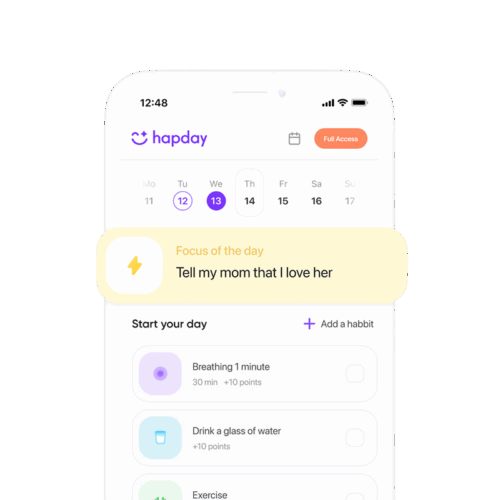
Get steady support with Hapday AI Life Coach: 24/7 guided sessions, habit tracking, and personalized wellness programs to anchor your new sleep ritual.
[Image alt: person using a body scan to fall asleep fast with mindfulness for beginners in a softly lit bedroom]
Quick reference: a simple bedtime flow to try tonight
- 30–60 minutes before bed: dim lights, park phone, tidy the space.
- Sit for three minutes: feel contact points, name three sensations, lengthen exhale.
- In bed: 4‑6 breathing for three minutes; body scan from head to feet.
- If thoughts surge: Noting Whisper, count exhalations, hand‑on‑heart reassurance.
- If wide awake after ~20 minutes: get up briefly in low light, then return.
The Bottom Line
Mindfulness doesn’t make sleep happen on command — it lowers the volume on stress and offers your nervous system a clear runway to land. Keep it gentle, keep it consistent, and let presence be the lullaby. Sleep follows.
References
- CDC: How Much Sleep Do I Need?
- CDC: Data and Statistics
- CDC: Sleep Hygiene Tips
- Harvard Health Publishing: Mindfulness meditation may ease insomnia, improve sleep
- Harvard Health Publishing: Breathing to relax
- NIH NCCIH: Meditation and Mindfulness — What You Need To Know
- NIH NCCIH: Relaxation Techniques — What You Need To Know
- Mayo Clinic: Insomnia — Symptoms and causes
- American Psychological Association: Stress effects on the body
Join 1.5M+ people using Hapday’s AI-powered tools for better mental health, habits, and happiness. 90% of users report positive changes in 2 weeks.