


Mindful Breathing: The Journey to Inner Peace
Table of Contents
- Grasping the Essence of Mindful Breathing
- The Science Underpinning Mindful Breathing
- Methods to Cultivate Mindful Breathing
- Reaping the Benefits of Mindful Breathing
- The Brain—Mindful Breathing’s Playground
- Embedding Mindful Breathing in Everyday Life
- Wrapping It Up
Grasping the Essence of Mindful Breathing
Mindful Breathing revolves around giving your full attention to the dance of your breath as it moves in and out. Unlike other meditation styles that might engage visualizations or repetitive chants, this approach invites you to simply be with your breath—no strings attached. It’s about rooting ourselves in the present, the very heart of mindfulness.
The Science Underpinning Mindful Breathing
Recent insights from research underscore the advantages of mindful breathing on our mental well-being. For instance, a 2018 paper in Psychiatry Research revealed how regular practice substantially decreased symptoms of anxiety and depression. Not only that, but experts from Harvard Health also point out that deep, mindful breaths can lower cortisol—the notorious stress hormone—thereby promoting relaxation.
Methods to Cultivate Mindful Breathing
-
The 4-7-8 Breathing Technique
Breathe in through your nose for four counts, hold this breath for seven counts, and then let it out slowly through your mouth for eight counts. Invest a few minutes daily in this practice—it can truly calm the mind and slow heartbeat.
-
Box Breathing
Also known as four-square breathing, this method requires you to inhale for four counts, hold for another four, exhale for four more, and pause before starting anew. The rhythm of it—a technique even mastered by Navy SEALs—helps maintain calm under pressure.
Reaping the Benefits of Mindful Breathing
-
Bolstering Emotional Resilience
By enhancing our present-moment awareness, mindful breathing aids in emotion regulation. A study in the journal Emotion indicated participants who practiced it showed better emotional control, aiding them in facing life’s storms with more resilience.
-
Boosting Focus and Productivity
Short bouts of mindful breathing sprinkled throughout your workday can enhance focus. According to research from the Journal of Cognitive Enhancement, even brief mindful breathing sessions can sharpen concentration and uplift cognitive prowess.
The Brain—Mindful Breathing’s Playground
This practice doesn’t just influence emotions; it can potentially alter brain structure. A notable study from the University of Massachusetts unveiled how regular practice might boost gray matter density in areas linked to memory and stress management. Such transformations offer deeper emotional regulation and enduring tranquility.
Embedding Mindful Breathing in Everyday Life
- Start Small
Just five minutes a day—begin there and increase as you grow more comfortable.
- Sync with Routine Activities
Bring mindfulness into everyday tasks—be it dishwashing or strolling. It’s about transforming the mundane into mindful, integrating seamlessly into life’s tapestry.
- Craft Your Sanctuary
Find a corner at home where you can practice peacefully. Cultivating a serene environment aids reinforcement of the habit, signaling your mind to ease and concentrate.
Wrapping It Up
Mindful breathing is an open door to inner calm. Time and again, research affirms its efficacy—diminishing stress, refining emotional well-being, and heightening focus. By inviting this practice into the rhythm of your daily life, the balance and tranquility it promises are well within reach.
Ready to tread the path to inner peace? Start by embracing the practice of mindful breathing and let your breath unveil its transformative magic.
References
- Psychiatry Research: Study on “Mindful Breathing Reduces Stress and Improves Well-Being”
- Emotion Journal: Research on “Mindfulness and Emotional Regulation”
- Harvard Health: Insights on “Benefits of Deep Breathing on Stress Reduction”
- Journal of Cognitive Enhancement: Paper on “Impact of Mindful Breathing on Cognitive Performance”
- University of Massachusetts: Study on “Brain Structure and Mindful Breathing”
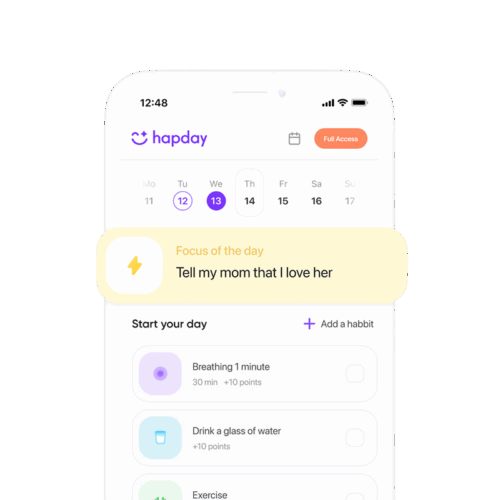
Join 1.5M+ people using Hapday’s AI-powered tools for better mental health, habits, and happiness. 90% of users report positive changes in 2 weeks.