


How to Find Inner Peace with Self-Compassion
Table of Contents
- Introduction
- Why Self-Compassion Calms the Stress Loop
- What Self-Compassion Is (and Isn’t)
- Why This Matters Now
- Self-Compassion for Inner Peace Starts with Noticing
- How to Build Daily Inner Peace with Self-Compassion
- Motivation Grows with Self-Compassion, Not Shame
- Boundaries Are Self-Compassion in Action
- Reframing Perfectionism with Self-Compassion
- Working with Shame and Comparison
- A Five-Sense Reset for Immediate Peace
- Design Your Personal Self-Compassion Plan
- When You Need Extra Support
- A Final Word from the Experts
- Your Next Gentle Step
- Summary and Next Step
- The Bottom Line
- References
Key Takeaways
- Self-compassion activates the body’s care-and-connect system, easing stress and reactivity.
- It blends mindfulness, common humanity, and kindness to replace shame with sustainable motivation.
- Small, repeatable practices (breath, touch, kind phrases) build inner peace over time.
- Compassion includes boundaries—firm limits voiced calmly are care in action.
- When symptoms persist, pairing compassion practices with professional support is wise.
Introduction
You wake with that dull thrum behind your eyes—the one that says yesterday refused to end when the lights went out. Before coffee, your inner critic is already at work, scrolling a mental feed of “not enoughs.” Then a quieter invitation slips in: place a hand on your heart, breathe, and try the underused skill that can soften a jagged morning—self-compassion. It isn’t indulgence. It isn’t a hall pass. As a reporter who’s covered mental health since 2009, I’d argue it’s one of the most teachable skills we keep overlooking, even as the research accumulates.
Why Self-Compassion Calms the Stress Loop
When life turns into a permanent sprint, the nervous system lives on alert. The brain’s threat machinery—designed to spot tigers—now misfires at inbox pings, shifting deadlines, and the ache of loneliness. The scope is not small: about 31.1% of U.S. adults experience an anxiety disorder at some point, according to the National Institute of Mental Health. The World Health Organization estimates more than 280 million people worldwide live with depression. Numbers rarely tell the whole story, but they explain the drumbeat many of us hear.
Self-compassion interrupts that loop by lighting up a different network—the care-and-connect circuitry that readies us for affiliation and support. When you meet pain with warmth rather than self-attack, the body registers “safer,” stress hormones tend to ease, and reactivity softens. Evidence-based mindfulness programs that include compassion training have been shown to reduce anxiety and perceived stress (Harvard Health; NCCIH). Mayo Clinic guidance notes that meditation can downshift the physiological stress response and support emotional steadiness—conditions in which compassion can take root.
“With self-compassion, we give ourselves the same kindness and care we’d give to a good friend.”
— Dr. Kristin Neff, Associate Professor, University of Texas at Austin
In my view, that reframing—from attack to care—is the most accessible lever most of us aren’t pulling often enough.
What Self-Compassion Is (and Isn’t)
There’s a common worry that compassion will make you soft. The data—and clinicians who’ve spent years in rooms with real people—say the opposite. Self-compassion has three parts:
- Mindfulness: naming what’s true without dramatizing or dismissing it.
- Common humanity: remembering that struggle is human, not personal defect.
- Kindness: offering yourself the tone, words, and gestures you’d offer someone you love.
“Self-compassion is simply giving the same kindness to ourselves that we would give to others.”
— Dr. Chris Germer, Clinical Psychologist and Lecturer, Harvard Medical School
Accountability doesn’t vanish; it becomes doable because shame is no longer driving the car. I’ve sat with countless sources over the years, and the pattern is consistent: cruelty masquerades as rigor; kindness makes change sustainable.
A picture from the field: When Maya, 28, finalized her divorce, she tried to outrun grief—late nights, endless to‑do lists. The weight leaked anyway: headaches, 3 a.m. spirals. She started a simple nightly practice—saying “This is hard,” reminding herself “People have felt this lost before,” then resting a warm hand on her chest. Within weeks, her anger loosened. Sleep returned in patches. She had enough steadiness to choose her next step instead of reacting.
Why This Matters Now
We’ve been trained to push through. To grind. But relentless push without care strains the system, and over time, strain curdles into anxiety and low mood. Mindfulness and compassion practices are associated with lower anxiety, fewer depressive symptoms, and reduced perceived stress (Harvard Health; NCCIH). The American Psychological Association has highlighted the growing evidence for self-compassion’s role in resilience and day‑to‑day mental health.
Three years out from the first pandemic winter, many readers tell me they’re still “fine” on paper and depleted in private. My take: grit without gentleness burns hot and short; grit with compassion actually lasts.
Self-Compassion for Inner Peace Starts with Noticing
Before you change the script, hear it. The inner critic often carries an old tone—family rules, cultural messages, perfectionist bargains.
“Emotions are data, not directives.”
— Dr. Susan David, Psychologist and Faculty, Harvard Medical School
Shame and fear are signals; self-compassion lets you use the information wisely rather than obeying the alarm.
Try this two-minute check-in:
- Pause and breathe. Silently say: This is a moment of stress.
- Name what’s here with precision: anxiety, sadness, overwhelm.
- Offer supportive touch—hand to chest or cheek—so the body feels held.
- Whisper a friend-phrase: I’m here for you. One breath at a time.
Why it helps: gentle labeling reduces limbic reactivity (the UCLA “affect labeling” work made this famous back in 2007), while warm touch and a kinder tone invite the parasympathetic system to engage. In plain terms, your body gets a chance to downshift (Mayo Clinic). I think of it as swapping a blaring siren for a steady bell.
How to Build Daily Inner Peace with Self-Compassion
Make it tiny; make it repeatable. A humble practice you do beats a grand one you avoid.
The Self-Compassion Break (60–90 seconds)
Why it works: It braids mindfulness, common humanity, and kindness into one swift reset, moving you from judgment to care.
How to do it:
- 1) Mindfulness: This is hard right now.
- 2) Common humanity: Struggle is part of being human; I’m not alone.
- 3) Kindness: May I be kind to myself. May I give myself what I need.
My view: this is the Swiss Army knife—compact, reliable, always in the pocket.
Affectionate breathing in motion
Why it works: Breath plus gentle movement grounds the body as your inner tone softens.
How to do it: On a walk or commute, inhale to a slow four, exhale to six. Pair with a phrase: Inhaling, softening. Exhaling, letting go. Five minutes is enough. It’s simple, not simplistic.
Write a “good friend” note to yourself
Why it works: Writing recruits perspective; you step beyond the harsh lens and access wiser care.
How to do it: Describe your situation as if a dear friend sent it. Reply with understanding, practical reassurance, and one next step. In my notebook, these letters are short, honest, and oddly clarifying.
Soothe-and-say plan for high-stress moments
Why it works: Pairing regulation (soothe) with language (say) keeps your frontal lobes online under pressure.
How to do it: Choose one soothing action (cool water on wrists, hand on heart) and one phrase: I can do hard things kindly. Rehearse when calm so it’s there when you need it.
Motivation Grows with Self-Compassion, Not Shame
The fear is predictable: If I ease up, I’ll let myself off the hook. But shame tends to freeze us. Self-compassion, by contrast, reduces fear of failure and supports resilient effort—you can learn from missteps without collapsing (see Harvard Health and APA resources). In my reporting, the people who keep showing up aren’t the harshest with themselves; they’re the ones who recover quickly.
Consider Luis, 33. He kept missing morning workouts, then berating himself as lazy. Avoidance followed, as it usually does. He tried a different frame: I’m tired because I’m holding a lot. That makes sense. What’s one gentle thing I can do today? He swapped a 45‑minute run for 12 minutes of stretching and a brief walk. A month later, the pattern flipped: fewer excuses, more consistency. He built the identity of someone who shows up—kindly.
Boundaries Are Self-Compassion in Action
Compassion isn’t only soft. It’s also firm. Guarding your time, energy, and attention is a form of care. When shame isn’t steering, you can say no without heat.
Try this boundary script:
- State your limit: I don’t have capacity for that this week.
- Offer an alternative if you honestly can: I can review it next Tuesday.
- Affirm the relationship: I value this project and want to give it full attention when I can.
Expect discomfort. That’s part of the skill. Mindfulness tools can ease the stress of hard conversations (NCCIH). My bias here: boundaries voiced calmly land better than apologies disguised as yeses. Pair each boundary with a debrief: I honored my needs. That matters.
Reframing Perfectionism with Self-Compassion
Perfectionism sounds like high standards; often it’s fear in a tailored suit. The unspoken bargain: If I’m flawless, I’m safe. Life, of course, refuses to honor that contract. Self-compassion moves you from brittle performance to flexible learning.
Gentle reframe:
- From: I can’t mess this up.
- To: I want to do well, and I can learn as I go. My worth isn’t on the line.
Mini practice for the inner critic:
- Spot the voice: That’s my “perfectionist protector.”
- Thank it: You’re trying to keep me safe.
- Reassign it: Help me show up with care, not fear.
I’ve yet to meet a perfectionist who didn’t have a brilliant conscience; the work is helping that conscience become a coach, not a tyrant.
Working with Shame and Comparison
Shame whispers, Everyone else has it together. Me? Not so much. Common humanity answers: No one is an exception to difficulty. Most people you admire carry private, serious battles. Compassion practices train attention to notice without spiraling, which leaves room for reality-based comparisons and a kinder self‑audit (Harvard Health). During the lockdown years, The Guardian reported on surging screen time and the mental health fog that followed—no surprise that comparison spiked with it.
Priya, 26, used to scroll before bed and wake feeling behind. She tried a two‑line nightly reflection: What mattered to me today? Where did I practice self-compassion? Over time, she measured her days by alignment, not applause. The comparison ache quieted.
A Five-Sense Reset for Immediate Peace
Sometimes the most compassionate choice is to return to the body, right now.
- Sight: Soften your gaze; name three colors in the room.
- Sound: Notice the farthest sound, the nearest sound, then your breath.
- Touch: Rest a palm over your heart or along your forearm.
- Smell/Taste: Sip warm tea or take in a calming scent—citrus, cedar, cardamom.
Why it helps: grounding pulls attention from ruminative loops into sensory presence, easing reactivity. Attention-anchoring practices reduce stress and support emotional well‑being (Mayo Clinic; NCCIH). My experience echoes the literature: the senses are a reliable doorway when thoughts refuse to cooperate.
Design Your Personal Self-Compassion Plan
Consistency turns a good idea into a nervous-system skill. Keep it human-sized.
- Morning: One minute of affectionate breathing and a quiet intention: May I move through today with gentleness and courage.
- Midday: A Self‑Compassion Break after a tough email or meeting.
- Evening: Two-line journal: One thing I handled with care; one thing I’ll soften next time.
- Weekly: A 20–30 minute mindfulness session to practice calm attention (Harvard Health). If sitting isn’t your style, try a mindful walk or gentle yoga. In my calendar, this block is protected like any meeting.
When You Need Extra Support
Self-compassion travels far, and sometimes we need more scaffolding—therapy, peer groups, structured courses. If anxiety or low mood persist and interfere with daily life, reach out to a licensed mental health professional. Mindfulness-based interventions and compassion training can complement therapy by reducing stress and improving emotion regulation (NCCIH). That’s not a personal failing; it’s a wise use of resources.
If this sounds familiar—you’re exhausted by being hard on yourself, you crave steadier peace, and you want science-backed steps—start where you are. Choose one small practice. Repeat it, especially when you forget. Let progress be imperfect; let it find its own pace.
A Final Word from the Experts
“With self-compassion, we give ourselves the same kindness and care we’d give to a good friend.”
— Dr. Kristin Neff, Associate Professor, University of Texas at Austin
“Self-compassion is simply giving the same kindness to ourselves that we would give to others.”
— Dr. Chris Germer, Clinical Psychologist and Lecturer, Harvard Medical School
“Emotions are data, not directives.”
— Dr. Susan David, Psychologist and Faculty, Harvard Medical School
Across different conversations, they point to the same place: connection—with yourself, with life as it is, and with a shared human story that makes tenderness both radical and reasonable.
Your Next Gentle Step
Inner peace rarely arrives as a single grand moment. It accrues—small, kind choices, repeated. Offer yourself a softer word. Take one steady breath. Remember you’re not the only one learning how to live. Commit to practicing self-compassion today, not as luxury, but as the most practical path to inner peace you can walk.
Summary and Next Step
Self-compassion helps regulate stress, quiet the inner critic, and build motivated effort without burnout. Rooted in mindfulness and common humanity, it trains the nervous system toward safety and the mind toward clarity—the conditions in which real peace grows. Start tiny, repeat often, and let kindness lead. For structure and accountability, try a guided program.
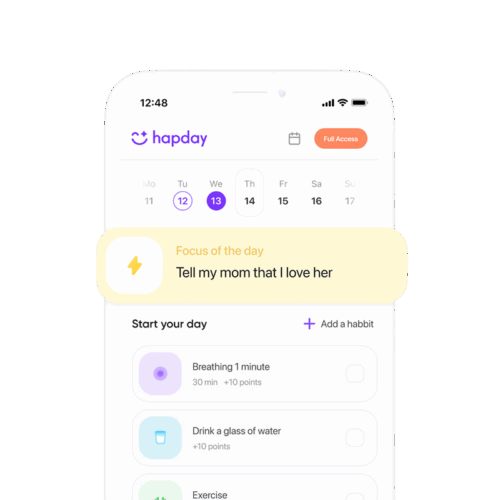
Try Hapday AI Life Coach for 24/7 guided sessions, habit tracking, and personalized wellness programs: https://apps.apple.com/app/hapday-ai-life-coach/id1498572982
The Bottom Line
Meet your moments with warmth instead of judgment. A few consistent, compassionate micro-practices—breath, touch, kind phrases, and clear boundaries—can shift your physiology, steady your mind, and make change sustainable. Start small, repeat often, and let gentleness power your grit.
References
- National Institute of Mental Health (NIMH) — Any Anxiety Disorder: https://www.nimh.nih.gov/health/statistics/any-anxiety-disorder
- World Health Organization (WHO) — Depression: https://www.who.int/news-room/fact-sheets/detail/depression
- Harvard Health Publishing — Mindfulness meditation and stress: https://www.health.harvard.edu/mind-and-mood/mindfulness-meditation-may-ease-anxiety-mental-stress
- National Center for Complementary and Integrative Health (NCCIH) — Mindfulness Meditation: https://www.nccih.nih.gov/health/mindfulness-meditation-what-you-need-to-know
- Mayo Clinic — Meditation: https://www.mayoclinic.org/tests-procedures/meditation/in-depth/meditation/art-20045858
- American Psychological Association (APA) — Speaking of Psychology: Self-compassion: https://www.apa.org/news/podcasts/speaking-of-psychology/self-compassion
Join 1.5M+ people using Hapday’s AI-powered tools for better mental health, habits, and happiness. 90% of users report positive changes in 2 weeks.