


Why Your Self-Care Daily Routine Isn’t Working
At 6:37 a.m., you light a candle, sip lemon water, and open your journal. You’re doing everything the internet promised would tame your stress. A meditation app hums. Gratitude list, protein smoothie, 10-minute stretch—lined up like good soldiers. And yet by 10 a.m., your chest still tightens during emails; by evening, your mind still spins. I’ve been there, rigidly hopeful. If this sounds familiar, it’s not a personal failure. It’s a sign the way your routine is built may be colliding with how your brain, body, and life actually work.
Here’s the unglamorous truth: a self-care daily routine is not a magic spell; it’s a system. And systems only work when they’re aligned with your biology, your context, and your real capacity. Let’s gently unravel why your self-care daily routine might be missing the mark—and how to rebuild it so it finally supports you.
Key Takeaways
- Self-care works when it aligns with biology and real-life capacity, not performance checklists.
- Protect the basics first: consistent sleep, balanced meals, and gentle movement.
- Anchor daily nervous-system practices to downshift stress physiology.
- Build flexible “minimum-typical-bonus” versions so care survives busy weeks.
- Redesign your environment to reduce friction and support repeatable habits.
The Checklist Trap: When Care Becomes Performance
Careening from breathwork to bath time can look like progress while quietly stoking anxiety. You check off habits and wonder why your stress still hums at a low burn.
“When self-care turns into a performance, it stops being care. If every activity is graded—Did I do it right? Did I do enough?—your nervous system stays in evaluation mode, not restoration mode.”
— Dr. Lila Gomez, PhD
Why this matters. Constant self-assessment is a stressor—full stop. National Institute of Mental Health materials have long warned that chronic stress dysregulates sleep, appetite, and mood and can nudge blood pressure upward. A routine that keeps your brain scanning for “success” can accidentally preserve the same tension you’re trying to ease. If your habit tracker feels like a boss, it’s time to renegotiate the job description.
How to shift. Add at least one practice with no metric and no improvement goal—simply a place to land. Sixty seconds feeling your feet on the floor. Staring out a window without your phone. Running warm water over your hands. Small, unscored, enough. Your nervous system reads safety in simplicity.
Missing the Foundation: Sleep, Food, and Movement
We layer fancy rituals on top of unmet basics, then wonder why the glow never sticks. It won’t. Not until the floor holds.
Sleep. Without it, everything frays. The CDC estimates roughly one in three U.S. adults doesn’t get enough sleep, and Harvard Health details how evening blue light suppresses melatonin and shifts circadian rhythms.
“You can chant affirmations all day, but if you’re chronically short on sleep, your emotional regulation tank is empty. Think of sleep as the floorboards of your self-care routine. If they’re rotting, the whole structure creaks.”
— Amir Rahman, MD, Psychiatrist and Sleep Medicine Specialist
Movement. Exercise is one of the most reliable mood shifters we know, yet only about one in four adults meets recommended targets. Even brief, gentle bouts help. Movement reduces stress hormones and releases endorphins—shifting mood and energy in ways an inspirational quote simply can’t.
Food. Blood sugar dips can masquerade as anxiety, irritability, or low motivation. Regular meals with protein, fiber, and healthy fats stabilize energy and focus. “Often the ‘nothing works’ feeling is really about timing meals and snacks.”
Mini case. When Maya, 28, went through a divorce, she doubled down on guided meditations and bought a dozen wellness supplements. Still, she woke at 3 a.m., bone-tired and foggy. After a screen curfew, a real breakfast by 9 a.m., and a 15-minute afternoon walk, the very same meditation she’d been doing for months suddenly felt effective. Her routine didn’t need to be longer; it needed a sturdier base.
Nervous System Care, Not Just Nice Things
Bubble baths are lovely; they don’t always downshift physiology. Practices like slow breathing, mindfulness, and body scans can change the internal dial. Mindfulness can reduce stress and improve anxiety and mood for many people (not a cure-all), and eight weeks of training has been linked with changes in brain regions tied to learning and emotional regulation.
Why it works. Slow, diaphragmatic breathing nudges the parasympathetic system, easing heart rate and signaling safety. Mindfulness redirects attention from rumination to direct experience.
How to do it. Try a 3-2-4 breath for two minutes—inhale for 3, hold 2, exhale for 4. Or spend three minutes labeling sensory input: “see—light, hear—hum, feel—warm.” Track how you feel before and after; don’t score your skill.
“We’re not chasing Zen. We’re practicing coming back to the body, again and again, which is where regulation lives.”
— Jordan Lee, LMFT
When Your Routine Is Too Rigid For Your Real Life
Life shifts week to week—work deadlines, kids’ sleep regressions, hormone cycles. A rigid routine will crack under that pressure. If your routine only “works” when nothing else is happening, it’s not built for your actual life. Flexibility is a mental health tool, not a concession.
- Non-negotiable minimum: the tiniest version you can do even on hard days (60 seconds of breath; one glass of water on waking).
- Typical day version: the sustainable middle.
- Bonus version: the longer practice you enjoy when time permits.
Case in point. Jay, 31, became a new parent and felt defeated when his 30-minute morning yoga vanished. He designed a flexible template: minimum (three cat-cows at the crib), typical (eight minutes of stretches while coffee brewed), bonus (20-minute flow during naptime). The pressure eased; consistency returned.
You’re Managing Symptoms, Not Sources
We often reach for quick relief while ignoring roots: a punishing workload, an isolating apartment, a lack of sunlight. Burnout is an occupational phenomenon linked to chronic workplace stress that hasn’t been successfully managed. No number of lavender baths will fix an unsustainable job. Social isolation also carries health risks.
Audit your context. Which one lever—work boundaries, morning sunlight, a weekly standing call with a friend—would address the source, not just the symptom? Social support buffers stress and improves resilience. Building it counts as care, not as extra credit.
Your Expectations Are Sabotaging You
A self-care daily routine is not a mood vending machine. Expecting instant calm sets you up to quit when lightning doesn’t strike. Shift from outcome goals (“I will feel amazing after journaling”) to process goals (“I will journal for 5 minutes after lunch”). Ambition is seductive; consistency is kinder.
You’re Overlooking Environment and Friction
If your yoga mat lives under the bed and your app logins are a mess, your routine will always feel like a climb. Make care the path of least resistance:
- Put the mat where you’ll trip over it.
- Keep a water bottle on your desk and refill after bathroom breaks.
- Pre-download your meditation track and set airplane mode.
- Create a wind-down corner with a lamp and a paper book.
These tweaks lower decision fatigue and reduce cues that pull you off-course. Linking habits with existing routines—“After I make coffee, I step outside for two minutes”—provides sturdy scaffolding.
You’re Trying To Calm A Body That’s Undersunned And Overstimulated
There’s a reason a slow walk under trees can soothe what your screen can’t touch. Exposure to nature has been linked with lower stress and improved mood. Build five minutes of natural light into your morning or pause by a window to watch the sky.
Notice your inputs. Evening blue light shifts circadian timing and suppresses melatonin. If your night ends with doomscrolling, your biology is getting mixed signals. Try a 30-minute digital sundown—dim lights, no bright screens—so your brain gets the memo: it’s safe to land.
You’re Not Writing It Out
The brain is a narrator. When thoughts loop, the body follows. Expressive writing can help you process and organize emotional material in some contexts. No need to write beautifully. Use a simple prompt: Today I’m carrying… It would help to… I can support myself by… Then close the notebook. Let the paper hold it. Keep a spiral by the kettle for exactly this reason.
How To Rebuild A Self-Care Daily Routine That Finally Works
Start with one week of honest observing—no fixing yet:
- What drains your energy most? When does irritability spike?
- How did you sleep? What did you eat and when? Did you move at all?
- Which practices felt nourishing versus performative?
Now design your routine like a supportive friend would.
1) Protect your floor, not your ceiling.
- Sleep: Choose a target bedtime window. Set an alarm for “lights down.” Keep screens out of the bedroom or use night mode on the lowest brightness.
- Food: Eat within two hours of waking. Aim for protein plus fiber at meals; keep an easy snack handy at 3–4 p.m.
- Move: Commit to 10 minutes most days. Dance in your kitchen. Walk during one meeting. Add bodyweight squats after brushing your teeth.
2) Add one nervous-system anchor.
- Two minutes of paced breathing in the morning.
- A five-minute mindfulness practice after lunch.
3) Create tiny connection.
- Text one friend “thinking of you” as your coffee brews.
- Schedule a weekly low-stakes hang—walks count.
4) Build a flexible template.
- Minimum: one minute of breath and a glass of water.
- Typical: 10-minute walk, balanced breakfast, 5-minute mindfulness.
- Bonus: 30-minute yoga and journaling.
5) Make the environment do the heavy lifting.
- Place cues where you live your life.
- Reduce friction: charger in the hallway, book by the bed, shoes by the door.
6) Rename it to reset the vibe. If “self-care daily routine” feels like pressure, call it “daily support,” “energy care,” or “landing practices.” Language shapes expectation—and experience.
A quick note on therapy and medical care: if your stress or mood struggles feel unmanageable—or if you suspect anxiety, depression, or trauma are part of the picture—consider professional support. A routine is not a replacement for care; it’s a companion.
A Week In Practice (A Gentle Sketch)
- Monday: Sit on the floor for one slow minute on waking. Drink water. Eat a real breakfast. Ten-minute walk after lunch. Two minutes of 3-2-4 breath before bed.
- Tuesday: Open the window; take five breaths. Send one text to a friend. Keep your phone in the kitchen at night.
- Wednesday: Repeat the basics. If you’re spent, do only your minimum. Minimum counts.
- Thursday: Swap a stressful podcast for quiet during your commute. Write three lines about what you need today.
- Friday: Move your body to one song. Choose an easy dinner. Lights dim 30 minutes before bed.
- Weekend: One deeper practice you enjoy (longer walk, yoga, nature sit). One no-metric pleasure (warm shower with music, lying on the rug, coloring with a kid).
“Self-care that works is boring on purpose. It repeats. It bends with your life. It feeds your biology first, and then your spirit starts to exhale.”
— Amir Rahman, MD
Image alt: A quiet morning scene with sunlight on a kitchen table, a mug of tea, and a journal—reframing a self-care daily routine to feel grounding and real.
The Bottom Line
Your routine isn’t failing because you’re broken—it’s likely misaligned with your biology and real life. Protect sleep, food, and movement; add a simple nervous-system anchor; and make it flexible with minimum-typical-bonus versions. Redesign your environment so care is the path of least resistance. Let success be returning, not perfection.
Summary + CTA
Small, steady habits that honor sleep, food, movement, and your nervous system make a self-care daily routine finally work. Build a flexible “minimum-typical-bonus” template and define success by returning, not perfection. If you want compassionate structure—plus accountability that bends with real life—consider guided support.
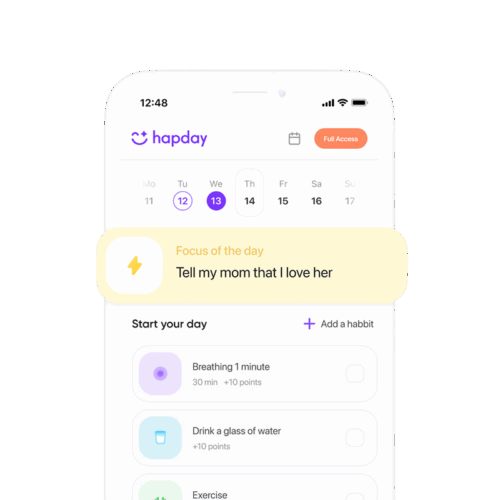
Get personalized guidance with Hapday AI Life Coach: https://apps.apple.com/app/hapday-ai-life-coach/id1498572982
References
- CDC: Sleep and Sleep Disorders
- Harvard Health Publishing: Blue light has a dark side
- CDC Physical Activity: Facts
- Mayo Clinic: Exercise and stress
- CDC: Healthy Eating
- NCCIH: Mindfulness Meditation
- Harvard Gazette: Eight weeks to a better brain
- NIA: Creating Healthy Habits
- WHO: Burn-out an occupational phenomenon
- CDC: Loneliness and Social Isolation Linked to Serious Health Conditions
- Mayo Clinic: Social support
- APA Monitor: Nurtured by nature
- APA Monitor: Writing to heal
- NIMH: 5 Things You Should Know About Stress
Join 1.5M+ people using Hapday’s AI-powered tools for better mental health, habits, and happiness. 90% of users report positive changes in 2 weeks.