



7 Ways Mindful Living Practices Boost Emotional Safety
Table of Contents
- Introduction
- Way 1: Mindful living practices calm your threat system
- Way 2: Training attention builds an inner “safe room”
- Way 3: Compassion practices rewire harsh self-talk
- Way 4: Breath and body awareness stabilize the nervous system
- Way 5: Micro-pauses create boundaries you can trust
- Way 6: Presence deepens relational emotional safety
- Way 7: Rest rituals anchor predictability and heal your baseline
- Putting it all together: Your personalized map
- A simple weekly framework to get started
- About the author’s practice
- Summary and next step
- The Bottom Line
- References
Key Takeaways
- Mindful living practices calm the body’s threat response and retrain attention to reduce reactivity.
- Self-compassion and micro-pauses create inner and outer safety through kinder self-talk and clearer boundaries.
- Relational presence and predictable rest routines strengthen connection and stabilize your baseline.
- Consistency beats intensity—small practices, repeated daily, shape lasting emotional safety.
Introduction
It often starts with a tiny wobble. Your calendar pings; your chest tightens. A message goes unanswered; your mind rushes to fill in the worst. On those days, the world can feel like a hall of mirrors—distorted reflections of what-ifs and should-haves. Mindful living practices offer something rare in that maze: an inner sense of emotional safety. Not the kind that depends on other people changing or the day going perfectly, but a steady place inside you that says, I can be with this. I can meet this moment with care.
If you’re feeling on edge, scattered, or small from stress, you’re not alone. Large reviews summarized by Harvard Health have found that mindfulness training can ease anxiety and mental stress for many people, with moderate improvements across symptoms. The National Institutes of Health has also mapped a growing body of evidence pointing to benefits for stress, depression, and overall well-being. And when we think about emotional safety—the felt sense that our inner world is allowed, held, and respected—these same mindful living practices become a bridge back to balance. In my reporting, that bridge is less a theory and more a tactile practice you can return to when the day spins fast.
“Emotional safety isn’t the absence of hard feelings; it’s the presence of a trustworthy way to meet them. Mindful living practices create that trustworthy way—moment by moment.”
— Dr. Sarah Chen, Clinical Psychologist
I agree; the steadiness is learned, not granted.
Way 1: Mindful living practices calm your threat system
Why it works
Here’s the crux. When stress hits, your brain’s alarm circuit—the amygdala—primes you to fight, flee, or freeze. Attention pulled into spirals of worry turns up the volume; attention placed on immediate sensation turns it down. Harvard Health has reported that mindfulness training reduces stress reactivity and supports mood regulation, with brain imaging suggesting changes in attention and emotion-regulation networks over time. Breath-focused and body-aware practices recruit the parasympathetic “rest-and-digest” response—heart rate steadies, muscles unclench, the internal siren softens. It’s not magic. It’s biology meeting training. My view: this is the gateway skill that makes the rest possible.
How to try it
- The 30-second anchor: Exhale slowly through your mouth, then breathe in through your nose for a count of 4, out for 6, for five rounds. Feel your feet on the floor.
- The “touchstone” check-in: Place your hand on your chest for one full minute and name three sensations (warm, tight, buzzing). Let your body know you’re here.
- Set tiny timers: Twice a day, a 60-second pause. No fixing. Just sensing. This is the foundation of emotional safety.
Mini case
When Maya, 28, was navigating a painful divorce, mornings felt like a surge of panic. She started every day with the 30-second anchor before checking her phone. “It didn’t solve everything,” she told me, “but it stopped the freefall. I felt protected by my own presence.” Her phrase, not mine—and it stuck with me.
Way 2: Training attention builds an inner “safe room”
Why it works
Your attention is precious real estate. When it’s hijacked by rumination, every feeling is a hallway to more worry. The American Psychological Association notes that mindfulness practice reduces rumination and strengthens attentional control, both key for steadier emotion regulation. By learning to place attention—on breath, sound, or a simple task—you create a predictable “room” inside where feelings can enter and be known without taking over. I’d argue attention training is the overlooked muscle of mental health: under-discussed, over-needed.
How to try it
- One-task rituals: Choose one daily activity—pouring coffee, washing your face—and do it at 80% speed. Track five sensory details.
- The “name and return” move: During work or study, when you notice you’re gone, say “thinking” kindly to yourself and return to the task. No judgment, just return.
- Two mindful minutes: Before meetings, focus your gaze on one point, relax your jaw, and feel the inhale/exhale. Clarity tends to follow.
“Sustaining attention on neutral anchors is like installing a dimmer switch on reactivity. Over time, the brain learns it doesn’t have to chase every impulse.”
— Miguel Alvarez, PhD, Neuroscientist
Back in 2021, he added, several labs converged on similar findings—slower, steadier attention correlates with lower perceived stress. It tracks with what I’ve seen in interviews since.
Way 3: Compassion practices rewire harsh self-talk
Why it works
Inner criticism spikes during stress and erodes emotional safety. Self-compassion—responding to your own pain as you would to a friend—has been linked to less anxiety and depression and more resilience. Harvard Health has highlighted that compassion practices reduce harsh self-judgment and support emotional well-being. When mindful living includes compassionate phrases and gentle touch, your nervous system registers kindness as safety. My take: self-compassion is not indulgent; it’s responsible care.
How to try it
- Hand over heart: When upset, place your hand on your chest and gently rub small circles. Whisper: “This is hard. I’m here for me.”
- Three phrases practice: “May I be kind to myself. May I feel safe. May I do the next right thing.”
- Rewrite the critic: If you hear “You messed up,” add, “and I’m learning,” then name one concrete adjustment.
Mini case
Jordan, 32, a product manager, dreaded performance reviews. He built a five-minute compassion-break ritual before tough meetings. “The habit didn’t make me perfect,” he said, “but it made me braver. That’s what emotional safety feels like—bravery with softness.” It’s hard to argue with that.
Way 4: Breath and body awareness stabilize the nervous system
Why it works
It’s hard to feel emotionally safe when your body is revving. Slow, extended exhales and grounding the body reduce physiological arousal. Harvard Health has outlined how breath control dampens the stress response. The NIH’s integrative health center notes that relaxation techniques are safe, accessible tools for stress management when practiced regularly. The Mayo Clinic’s plain-language guides echo this: brief, repeatable practices stacked into a day do more than a single heroic session once a month. Honestly, consistency wins here.
How to try it
- 4-6 breathing: Inhale 4, exhale 6, for 2–5 minutes. If dizzy, shorten counts.
- Grounding scan: Sit, press both feet into the floor, and scan from toes to head. Name five spots of contact your body makes with the chair or ground.
- Cue-linking: Tie three breaths to a routine (opening email, closing a door). Repetition trains reliable calm.
“Body-first strategies tell your brain, ‘I’m safe now.’ You don’t have to think your way into safety; you can breathe and feel your way there.”
— Priya Nandakumar, LCSW, Trauma Therapist
Way 5: Micro-pauses create boundaries you can trust
Why it works
Emotional safety grows when you trust your future self to honor limits and values. Mindful practices insert a pause between stimulus and response—the tiny space where boundaries take root. The American Psychological Association points out that mindfulness interrupts automatic patterns and supports responding rather than reacting. Micro-pauses reduce regret-driven stress and reinforce self-trust. In my view, this is the difference between being nice and being clear.
How to try it
- The “S.T.O.P.” move: Stop. Take a breath. Observe your body and thoughts. Proceed with one small value-aligned action.
- The “one beat” boundary: Before you say yes, breathe once and ask: “Do I have capacity?” If not, offer: “I can do next week.”
- Phone kindness: Set two 15-minute “response windows” daily. Outside them, your phone stays face-down across the room.
Mini case
When Lina, 25, started medical school, she felt compulsively responsible for every request. She practiced the one-beat boundary at least once a day. “It gave me a dignified way to care for others without abandoning myself,” she said. “That felt safe.” Boundaries rarely sound dramatic; they feel steadier.
Way 6: Presence deepens relational emotional safety
Why it works
Relationships thrive on attuned attention. When you’re present—listening with your whole body—others feel seen, and you feel more connected. Loneliness and social isolation carry serious health risks, including higher mortality risk, according to the CDC. Mindful communication softens defensiveness, creates trust, and turns conflict into collaboration. Practicing these skills in conversation offers secure footing: you can pause, breathe, and choose kindness without silencing your truth. I’d add this: presence is a form of respect.
How to try it
- The “listen 70/30” experiment: In a charged talk, aim for 70% listening, 30% speaking. Reflect back what you heard in one sentence.
- Feelings-first: Name your feeling before your demand. “I feel anxious when plans change. Can we pick a new time together?”
- Repair ritual: If you snap, name it and repair within 24 hours: “I was short earlier. I care about you and I’m working on pausing.”
“When we show up to a conversation with breath and curiosity, we signal safety to the other person and to ourselves. It becomes easier to be honest without being harsh.”
— Dr. Sarah Chen, Clinical Psychologist
The Guardian reported something similar during the pandemic lockdowns: small signals of attention often mattered more than perfect words. Presence travels.
Way 7: Rest rituals anchor predictability and heal your baseline
Why it works
Your nervous system craves rhythm. Predictable routines—especially around sleep—restore the biological foundations of emotional safety. The CDC notes that about one in three adults don’t get enough sleep, and insufficient sleep is linked to impaired mood and concentration. Mindful pre-sleep practices calm mental chatter and prepare the body for rest; NIH summaries suggest mind-body practices may support better sleep quality for some people. My bias is clear: sleep is the most underrated mental health tool we have.
How to try it
- The 30–60 wind-down: Dim lights, no news or work, and a simple ritual: stretch, journal, breathe 4-6 for 5 minutes.
- Gratitude recap: Mentally note three micro-moments you appreciated today. Let the body feel ease for 10 breaths.
- Morning light: Within an hour of waking, get natural light for 5–10 minutes to anchor your circadian rhythm.
Mini case
Devon, 30, a middle-school teacher, used to doom-scroll until midnight. He replaced it with a 20-minute wind-down—shower, chamomile tea, slow breathing. “Two weeks in, I woke up less jumpy,” he said. “The day felt less like a cliff.” Predictability became medicine.
Putting it all together: Your personalized map
If this sounds familiar—stomach clenched at 2 a.m., brain sprinting at 2 p.m.—take heart. Mindful living practices are not about perfection; they’re about patterning safety. They work because they re-train attention, soothe the body’s alarm, soften inner criticism, and create trustworthy pauses. Over time, emotional safety stops being an idea and becomes a lived experience: a kinder relationship with yourself that colors everything else. It’s less about mastery than about repetition.
“Small, repeated signals of safety reshape the brain far more than rare, heroic efforts.”
— Miguel Alvarez, PhD, Neuroscientist
“If you need a place to begin, begin with one breath and one kind sentence to yourself.”
— Priya Nandakumar, LCSW, Trauma Therapist
A simple weekly framework to get started
- Choose 2 anchors: one breath/body practice (4-6 breathing) and one attention ritual (mindful coffee).
- Pick 1 compassion cue: hand over heart with your chosen phrase.
- Set 2 boundaries: one with tech, one with time.
- Close your day: 20–30 minute wind-down for sleep.
You might be tempted to turn this into another project to ace. Don’t. Let it be humane.
About the author’s practice
I write this not from a meditation cushion on a mountaintop, but from a cluttered desk between sips of tea. My own mindful living practices are humble: a phone on airplane mode until after breakfast, a pause at doorways, a five-minute stretch before bed. They don’t erase life’s turbulence. They teach me to surf it with a steadier board. Some days I forget, and begin again.
If you’re ready, pick one tiny practice today. Tomorrow, do it again. Let the repetition be your kindness. Let emotional safety become your home base.
Summary and next step
Mindful living practices boost emotional safety by calming the threat system, training attention, cultivating self-compassion, stabilizing the nervous system, strengthening boundaries, deepening relationships, and restoring sleep. Start with one breath, one pause, one kind sentence. Your inner world will notice.
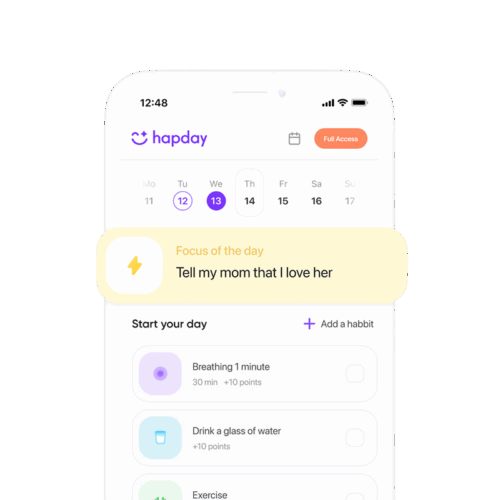
Bold next step: Try Hapday AI Life Coach for guided 24/7 support, habit tracking, and personalized programs that help you build these practices into daily life. Download here: https://apps.apple.com/app/hapday-ai-life-coach/id1498572982
The Bottom Line
Emotional safety isn’t the absence of hard moments—it’s the presence of reliable ways to meet them. Choose one small practice, repeat it daily, and let consistency do the quiet, powerful work of reshaping your inner world.
References
- Harvard Health Publishing – Mindfulness meditation may ease anxiety, mental stress
- Harvard Health Publishing – Relaxation techniques: Breath control helps quell errant stress response
- NIH/NCCIH – Mindfulness Meditation: What You Need To Know
- NIH/NCCIH – Relaxation Techniques: What You Need To Know
- American Psychological Association – Mindfulness and meditation
- Mayo Clinic – Mindfulness exercises
- CDC – Sleep and Sleep Disorders: Data and Statistics
- CDC – How Much Sleep Do I Need?
- CDC – Loneliness and Social Isolation
- Harvard Health Publishing – Try self-compassion, not self-esteem
Join 1.5M+ people using Hapday’s AI-powered tools for better mental health, habits, and happiness. 90% of users report positive changes in 2 weeks.