



7 Ways to Reset Your Self-Care Daily Routine
Table of Contents
- Introduction
- 1) Start the day with breath, light, and a single intention
- 2) Move in “tiny stacks,” not epic workouts
- 3) Nourish with a hydration-plus plate
- 4) Put your phone on a leash (not in charge)
- 5) Schedule one mindful reset break like it’s an appointment
- 6) Build a tiny ritual for connection and gratitude
- 7) Close the night with a wind-down you can love
- How to make the reset stick: design, not discipline
- A gentle week-long reset plan you can start today
- The Bottom Line
- References
- Summary and next step
Key Takeaways
- Small, consistent habits beat intense overhauls for restoring calm and energy.
- Anchor your day with morning light, paced breathing, and a simple intention.
- Stack micro-movements, hydrate early, and protect your attention with digital boundaries.
- Mindful pauses, social connection, and a steady wind-down reinforce mood and sleep.
- Design your environment to cue desired behaviors—let structure do the heavy lifting.
Introduction
The morning you finally admit it is often a quiet one. The coffee tastes a little flat, your shoulders are already tense, and your thumb, almost on autopilot, drifts to your phone for a quick hit of headlines and messages. There’s a heaviness that follows you from sink to screen to desk. If this sounds familiar, you’re not failing. It’s a signal—subtle, insistent—that it’s time to reset your self-care daily routine. Gently. Honestly. With tools that hold up on an ordinary Tuesday.
When Maya, 28, went through her divorce, she described the days as “sticky—like everything took five extra steps.” She didn’t raze the house and rebuild. She started with two minutes of breath before opening her laptop. By week’s end, she noticed her jaw wasn’t locked by 11 a.m. A month in, she’d added a brisk post-lunch walk and a simple cue before bed. No miracle, no magical thinking. She found a cadence. As a reporter who’s covered stress and behavior change since 2010, I think cadence beats intensity almost every time.
Before we get practical, a reassurance. You don’t need more willpower; you need a plan that helps your body and brain meet the day on the same team. Research continues to say the quiet part out loud: daily self-care habits—movement, sleep, hydration, sunlight, mindful pauses—shift physiology in boringly reliable ways. Back in 2021, the World Health Organization reiterated the 150–300 minutes of moderate activity per week for adults and tied it to reduced symptoms of anxiety and depression. The CDC has been steady on the sleep drumbeat for years: most adults need at least 7 hours. Harvard Health has long noted that slow, controlled breathing taps the relaxation response via the vagus nerve, easing a cascade of stress symptoms. Consistency isn’t glamorous, but it’s gold—especially when you’re trying to reset your self-care daily routine without turning life upside down.
1) Start the day with breath, light, and a single intention
Why it works: Your brain’s internal clock takes its cues from light. Morning light exposure helps sync circadian rhythms, boosts alertness, and—crucially—sets up better sleep that night. Gentle breathwork activates the parasympathetic nervous system, the body’s brake pedal. Start here and you tell your physiology: we’re steady today. My view? This is the closest thing we have to a low-effort hinge that moves the whole door.
The research: The CDC emphasizes regular sleep-wake timing as foundational for restorative sleep, and morning light helps “lock” that rhythm. Harvard Health explains that paced breathing can quiet the stress response by stimulating the vagus nerve, nudging heart rate and blood pressure down.
How to do it:
- As you wake, sit up and place one hand on your chest and the other on your belly. Inhale through your nose for 4, hold 2, exhale for 6. Repeat for 6–8 cycles.
- Step outside or to a bright window for 5–10 minutes. No sunglasses if safe and comfortable.
- Whisper one intention: “Today I move slowly,” or “I ask for help once.” Keep it simple enough to remember at noon.
“Think of mornings as the steering wheel of your nervous system. Two minutes of breath and light can pivot an anxious spiral into a focused day. This is the gentlest way to reset your self-care daily routine—by letting biology help you.”
— Dr. Sarah Chen, Clinical Psychologist, NYU
2) Move in “tiny stacks,” not epic workouts
Why it works: You don’t have to crush a workout to feel different by 3 p.m. Micro-bursts of movement lift mood, change posture, and release endorphins while nudging blood flow where you actually need it. The WHO leaves room for stacking minutes across the day; exercise doesn’t have to be a single, cinematic block to count. I’ve covered athletes and night-shift nurses—stacks are the most democratizing approach I’ve seen.
How to do it:
- Pick a “stack” you repeat 2–3 times daily: 60 seconds of squats, 30 seconds of shoulder rolls, a brisk 5-minute walk, and a stretch you love. Under 10 minutes total.
- Tie stacks to existing cues: after coffee, following a meeting, and before dinner.
- Track the minimum, not the maximum. Two stacks? You win the day.
When Jordan, 32, an overextended paramedic, began stacking a flight of stairs and 90 seconds of push-ups after his morning radio check, he noticed a shift: “I wasn’t less busy, I was less brittle.” Little reps built resilience, and the experiment helped him reset his self-care daily routine without scheduling gymnastics.
3) Nourish with a hydration-plus plate
Why it works: Even mild dehydration saps energy and blunts focus. Balanced meals stabilize blood sugar and mood, averting the 4 p.m. cliff that can feel suspiciously like anxiety. This is not a diet story; it’s a steadiness story.
The research: The CDC advises replacing sugary drinks with water; hydration regulates temperature, cushions joints, and supports cognition. Real-food meals help prevent the spikes and crashes your nervous system reads as threat.
How to do it:
- Front-load hydration: 8–16 ounces of water in the first hour you’re awake. Add a pinch of salt or a squeeze of citrus if you like.
- Build a “hydration-plus” lunch: water plus a plate with protein (beans, eggs, chicken, tofu), fiber (vegetables, whole grains), and healthy fats (olive oil, nuts, avocado).
- Keep a visible bottle at your desk and mark three checkpoints: 10 a.m., 2 p.m., 6 p.m.
“Fuel is a form of self-respect. If you’ve felt scattered, start with water and one balanced plate. It’s a compassionate lever to reset your self-care daily routine because it steadies you from the inside out.”
— Priya Raman, RDN and Health Coach
4) Put your phone on a leash (not in charge)
Why it works: Constant notifications fracture attention and jack up perceived stress. Blue light at night suppresses melatonin and pushes sleep later than you intend. In 2020, “doomscrolling” wasn’t just a word—The Guardian reported surges in late-night news binges that left people wired and tired. My bias? Attention is the scarcest resource in modern life; protect it and half the day feels different.
The research: Harvard Health notes that evening blue light disrupts circadian rhythms and recommends reducing screen exposure before bed to protect sleep quality.
How to do it:
- Create two “no-scroll zones”: the first 30 minutes after waking and the last 60 minutes before bed. Use a real alarm clock if needed.
- Batch notifications: switch your phone to Do Not Disturb and check messages at set times.
- Use a single-tab rule on your desktop. When you finish, close it. Train your attention to finish things.
“Digital boundaries are not about discipline; they’re about mood hygiene. When you close a loop instead of toggling endlessly, you reclaim attention—and that’s often the missing ingredient when you reset your self-care daily routine.”
— Dr. Sarah Chen, Clinical Psychologist, NYU
5) Schedule one mindful reset break like it’s an appointment
Why it works: Mindfulness narrows the aperture on the present moment, reducing stress reactivity and sharpening emotional regulation. Even short, regular sessions teach your mind to return, return, return. I’m convinced five honest minutes beat thirty begrudging ones.
The research: The American Psychological Association highlights that mindfulness meditation can reduce stress and anxiety, improve working memory, and support emotional balance.
How to do it:
- Choose a practice you’ll actually do: a 5-minute body scan, a mindful tea break, or two pages of expressive writing.
- Put a 10-minute block on your calendar—midday tends to work well.
- If you journal, try a prompt with a beginning and an end: “Right now I notice…,” “One thing that went well is…,” “The smallest next step is…”
- If you prefer breath awareness, set a timer and rest your attention on the sensation of breathing. Expect your mind to wander; return kindly.
Harvard Health reports that expressive writing—putting emotions into words—can ease stress and help people make meaning after difficult experiences. Journaling is not a luxury. It’s a basic tool for recalibrating your day.
6) Build a tiny ritual for connection and gratitude
Why it works: Social support buffers stress and predicts better health outcomes across decades of research. Gratitude reorients attention toward resources, not just threats. Small doesn’t mean trivial; it means doable. And in behavior change, doable wins.
The research: Mayo Clinic describes social support as a powerful stress antidote tied to resilience and well-being. Harvard Health notes that gratitude practices are associated with greater happiness and stronger relationships.
How to do it:
- Pick one day-to-day anchor for connection: send a two-line check-in text after lunch or share a rose/thorn with a partner or roommate over dinner.
- Keep a one-sentence gratitude log by your toothbrush. Write a single line each night. Read a week’s worth every Sunday.
- If reaching out feels heavy, start with a “micro-ask”: “Can I get your eyes on this?” or “Do you have five minutes?” Each small yes reduces the friction of isolation.
“People think they need a great conversation to feel connected. But in behavior change, frequency beats intensity. Tiny contacts sew a safety net—and that support makes it far easier to reset your self-care daily routine and keep it.”
— Mateo Alvarez, MD, Sleep and Behavioral Medicine Specialist, Stanford
7) Close the night with a wind-down you can love
Why it works: A consistent pre-sleep ritual tells the brain, We’re closing up shop. Lower light, calmer inputs, predictable steps—your nervous system needs a runway, not a cliff. I’ve sat in too many sleep clinics to think willpower trumps rhythm.
The research: The CDC recommends at least 7 hours of sleep for adults and notes that consistent bed and wake times improve quality. Harvard Health cautions that evening blue light delays sleep onset by suppressing melatonin.
How to do it:
- Decide on a “digital sunset,” 60 minutes before bed. Charge your phone outside the bedroom if possible.
- Create a 15–20 minute wind-down that’s appealing: stretch on the floor, read a paper book, take a warm shower, breathe for 5 minutes. Repeat the same 2–3 steps most nights.
- If your mind races, keep a notepad to do a 2-minute “brain sweep.” Capture tasks, worries, and wishes. They’ll be there in the morning; you don’t have to guard them overnight.
“Sleep is not a reward for doing enough; it’s a biological need. When you protect your wind-down, you protect your next-day mood, attention, and motivation. That’s the foundation to reset your self-care daily routine without white-knuckling it.”
— Mateo Alvarez, MD, Sleep and Behavioral Medicine Specialist, Stanford
How to make the reset stick: design, not discipline
Why it works: Habits hitch a ride on cues and context. If you change the setup, behavior follows—far more reliably than asking yourself to be a hero by dinner. In my reporting, design beats grit nine days out of ten.
The research: NIH’s News in Health explains that habits are automatic behaviors sparked by cues, and changing the environment—altering triggers, adding friction to unhelpful patterns—helps new routines take hold.
How to do it:
- Pair each new behavior with a cue you already have (coffee, commute, lunch).
- Lower the bar. The goal is consistency, not heroics.
- Make friction your friend: keep a book on your pillow, leave a sticky note on the remote, put a water bottle by your keys, move social apps to a folder off your home screen.
- Measure actions, not identity. “I did my breath set,” not “I am calm now.” The former is under your control; the latter is a moving target.
A gentle week-long reset plan you can start today
- Day 1–2: Morning breath + light; one hydration-plus meal; digital “no-scroll” morning.
- Day 3–4: Add one movement stack; schedule a 10-minute mindful break.
- Day 5: Create your wind-down; set your digital sunset.
- Day 6: Send one check-in text; log one sentence of gratitude.
- Day 7: Review what felt good. Keep those. Release the rest.
You might be surprised by how quickly your body responds when you reset your self-care daily routine in this humane way. The first change people report is rarely a flatter stomach or perfect focus. It’s less noise in the head. Fewer spirals. More breath between moments. That’s not a small thing. That’s a new baseline.
When life is loud, choose whispers that add up. Two minutes of breath. Five minutes of sun. One glass of water. A text that reminds you you’re not alone. A wind-down that says, “Enough for today.” This is what it looks like to reset your self-care daily routine with steadiness and heart. The rest can grow from here.
The Bottom Line
Keep it kind, small, and steady. Pair simple cues with short, science-backed actions—light and breath in the morning, tiny movement stacks, mindful pauses, and a soothing wind-down. Let structure, not willpower, carry you toward a calmer, clearer baseline.
References
- World Health Organization (WHO) — Physical activity facts
- Centers for Disease Control and Prevention (CDC) — How Much Sleep Do I Need?
- Harvard Health Publishing — Relaxation techniques: Breath control helps quell errant stress response
- Harvard Health Publishing — Blue light has a dark side
- American Psychological Association (APA) — Mindfulness meditation
- Harvard Health Publishing — Writing about emotions may ease stress and trauma
- Mayo Clinic — Social support: Tap into the power of your relationships
- CDC — Water & Healthier Drinks
- Harvard Health Publishing — Giving thanks can make you happier
- NIH News in Health — Breaking Bad Habits
Summary and next step
When you reset your self-care daily routine, small, science-backed shifts—breath, light, tiny movement, mindful breaks, and a steady wind-down—retrain your body toward calm and clarity. You don’t need to hustle harder; you need a friendlier plan.
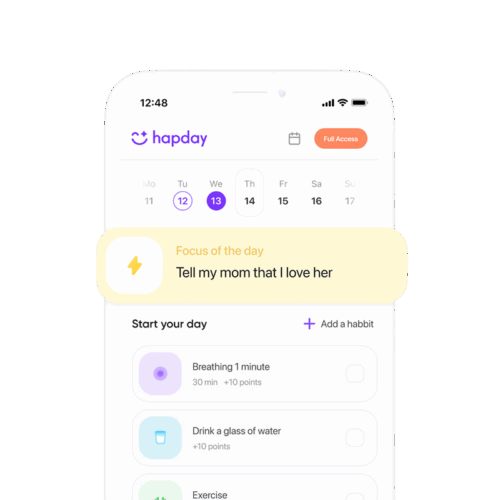
Try Hapday AI Life Coach for daily structure and support: 24/7 guided sessions, habit tracking, and personalized wellness programs. Get the app: https://apps.apple.com/app/hapday-ai-life-coach/id1498572982
Join 1.5M+ people using Hapday’s AI-powered tools for better mental health, habits, and happiness. 90% of users report positive changes in 2 weeks.