


Emotional Wellbeing: Your Roadmap to Inner Peace
In the soft glow of a cold winter’s dawn, Emma found herself alone at her kitchen table, her hands cradling a mug of hot tea like it was a fragile jewel. Silence enveloped the house, disturbed only by the low hum of the refrigerator—yet her mind ran circles, restless and loud. Her job, an intrusive list of tasks, and the relentless pressure of maintaining some form of balance during the chaotic holidays danced wildly in her thoughts. What her heart truly ached for was emotional wellbeing—a sense of tranquility that could defy the frenetic tempo of her daily life.
Can you see yourself in Emma’s shoes? If so, you’re not alone. Many strive for emotional steadiness—a place where we ride the highs and lows of life without feeling like a ship at stormy sea. But what does achieving emotional wellbeing really entail, and how on Earth can we work it into the fabric of our everyday grind?
“Emotional wellbeing revolves around cultivating resilience and command over how we confront challenges. It’s not about eradicating negative emotions but learning to steer through them thoughtfully.”
— Dr. Sarah Chen, Clinical Psychologist
This piece is your roadmap—offering grounded, scientific steps towards emotional harmony. Whether you’re navigating the whirlwind of modern life or personal hurdles, these tools may just help you craft a more harmonious, supportive daily cadence.
Table of Contents
- Understanding Emotional Wellbeing
- The Art of Mindful Presence
- Building Resilience Through Connection
- Embracing Emotional Literacy
- The Power of Exercise and Diet
- Gratitude: A Pathway to Positivity
- Conclusion: Embracing Your Emotional Journey
- The Bottom Line
Key Takeaways
- Emotional wellbeing is about resilience and navigating negative emotions thoughtfully.
- Mindfulness helps anchor us in the present, improving emotional regulation.
- Strong relationships provide support and enhance our sense of belonging.
- Journaling and emotional literacy contribute to better stress management and satisfaction in life.
- Regular exercise and gratitude practices profoundly impact our emotional health.
Understanding Emotional Wellbeing
Imagine emotional wellbeing as the firm roots of a tree; they hold you steady while allowing your branches to dance elegantly in the breeze. It’s about feeding every facet of your emotional health—from feeling awareness and stress management to fostering relationships that lift us up and nurturing a spirit of thankfulness and mindfulness.
Science Highlights the Importance of Emotional Health
The Mayo Clinic has shed light on the correlation between emotional wellbeing and our physical health. Those who regularly engage in techniques to regulate their emotions often boast reduced stress hormones, lower anxiety levels, and even fortified immune systems. With this in mind, let’s break down the core components of emotional wellbeing and how to weave them into the fabric of our everyday lives.
The Art of Mindful Presence
When anxiety about the future or regrets about past choices clutter your mind, finding your emotional foothold may feel as elusive as grasping smoke. Mindfulness—anchoring oneself in the present—emerges as a powerful remedy.
“The mind resembles a mountain stream—constantly moving and changing. Mindfulness enables us to immerse ourselves in these waters, embracing the moment sans judgment.”
— Dr. Jon Kabat-Zinn, Mindfulness Pioneer
Why Mindfulness Works
Mindfulness can bolster the brain’s capacity to effectively regulate emotions. A 2011 study published in Psychiatry Research: Neuroimaging revealed that just eight weeks of mindfulness can reduce the size of the amygdala (the brain’s stress center) while thickening the prefrontal cortex, responsible for concentration and decision-making.
How to Cultivate Mindful Presence
Begin with simple and practical steps—spend a few minutes each morning concentrating on your breathing. Throughout the day, aim to remain grounded: notice your morning coffee’s aroma, the warmth of the sun, the sound of laughter. These small anchoring moments introduce calm and constancy amid the chaos.
Building Resilience Through Connection
Humans are inherently social beings, naturally inclined to connect and support each other. When challenges arise, your support network can be an invaluable source of strength.
The Role of Relationships in Emotional Wellbeing
Support from friends and family not only alleviates stress but nurtures a sense of belonging and purpose. A significant Harvard University study—spanning over eight decades—demonstrates that strong social bonds are vital for emotional wellness and long life.
Investing in Your Relationships
Strengthen these connections by having meaningful conversations or scheduling regular meet-ups with friends. Maya, a 28-year-old who weathered a tough divorce, rediscovered her emotional life by reconnecting with college friends through video chats.
“At first awkward, but soon enough, these calls became my cherished ritual.”
— Maya, Reconnecting Friend
Embracing Emotional Literacy
Understanding your emotions and conveying them effectively is crucial for emotional wellbeing. Emotional literacy starts with identifying your feelings, even the uncomfortable ones, and articulating them in positive ways.
Why Emotional Literacy is Crucial
Research by Yale University’s Center for Emotional Intelligence indicates higher emotional literacy correlates with better stress handling, stronger relationships, and greater satisfaction in life.
Developing Emotional Literacy
Journaling is tremendously effective in enhancing your emotional awareness. Regularly pen down your feelings in a journal, free from self-criticism. Over time, you’ll unearth patterns offering insights into your emotional triggers and responses.
The Power of Exercise and Diet
What you consume—be it in food or movement—intimately affects your emotional state. Even brief spells of physical activity can release endorphins, the body’s natural mood lifters.
Science Behind Movement and Mood
The Journal of Health Psychology published a study revealing that as little as 20 minutes of exercise can significantly reduce feelings of anxiety and depression.
Creating an Exercise Routine
You don’t have to be a gym rat to reap the benefits of movement. Engage in activities you love—maybe a brisk nature walk or a lively dance class. And mind your diet: omega-3 fatty acids, leafy greens, and whole grains are reputed to boost mood and mental acuity.
Gratitude: A Pathway to Positivity
Practicing gratitude shifts focus from life’s deficits to its abundance, uplifting your emotional health.
The Science of Gratitude
Research from the University of California, Berkeley underscores that gratitude can enhance sleep quality, diminish stress, and bolster emotional resilience.
How to Foster Gratitude
Start a gratitude journal by jotting down three things you’re thankful for every evening. This habit can gradually pivot your perspective, planting seeds of positivity even in difficult moments.
Conclusion: Embracing Your Emotional Journey
As you venture toward emotional wellness, remember it’s a journey, not a static goal. With each mindful breath, every meaningful exchange, and through gratitude and resilience, life’s waves invite not resistance but rhythm—a dance of life that is yours to choreograph.
These steps are subtle shifts toward creating a home for emotional balance. Emma discovered solace in these practices, realizing that tending to her emotional wellbeing meant embracing her humanity—flaws and all.
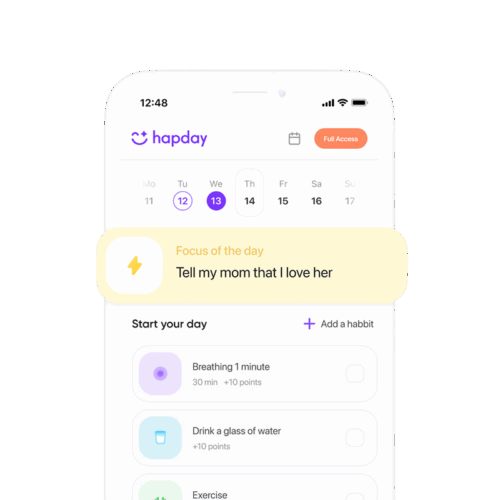
Whether you seek deeper connections or a more mindful existence, technology can lend a hand. Hapday AI Life Coach offers 24/7 guided sessions, habit tracking, and personalized wellness programs, supporting your journey to enhanced emotional wellbeing.
The Bottom Line
Emotional wellbeing is an achievable, evolving process. By embracing mindfulness, nurturing connections, enhancing emotional literacy, and practicing gratitude, you can create a balanced and fulfilling life. Start today; every small step counts on this beautiful journey.
Join 1.5M+ people using Hapday’s AI-powered tools for better mental health, habits, and happiness. 90% of users report positive changes in 2 weeks.