


Finding Emotional Wellbeing: Daily Mindfulness Tips
Table of Contents
- The Science Behind Mindfulness
- Daily Mindfulness Tips for Emotional Wellbeing
- Technology: An Unlikely Ally
- Real-Life Tales and Applications
- Everyday Mindfulness: Where to Begin
- Surmounting Mindfulness Barriers
- How Mindfulness Enhances Emotional Wellbeing
- Cultivating a Lasting Practice
- The Bottom Line
Key Takeaways
- Mindfulness can reshape the brain, enhancing emotional regulation and self-awareness.
- Simple practices like intentional breathing and gratitude journaling can foster emotional wellbeing.
- Technology can aid in mindfulness practices through apps offering guided meditations.
- Mindfulness is a journey that builds resilience and inner peace amidst life’s challenges.
Picture this: You’re standing in the heart of New York City’s hustle and bustle. Vehicles blare their horns, pedestrians rush in every direction, and the ceaseless clamor envelops you. Finding calm amid such chaos seems almost unattainable. But then… just a stone’s throw away lies Central Park, an oasis where time ambles and clarity comes into focus. Much like this stark contrast, weaving mindfulness into your everyday life can serve as your own private refuge—a much-needed balm for emotional wellbeing.
Whether you’re caught in the relentless grip of work stress or navigating the turbulent waters of a personal crisis, daily mindfulness can provide the anchor you need. In our ever-connected world filled with anxiety and burnout, carving out moments of peace and presence might be your perfect antidote.
The Science Behind Mindfulness
Why has mindfulness become such a buzzword lately? Simply put, science says it works. A Harvard study unearthed that mindfulness can reshape the physical structure of your brain—impacting regions tied to memory, self-awareness, and emotional regulation (Harvard Gazette, 2021). These findings shed light on why mindfulness boosts emotional wellbeing; it’s about more than just unwinding—it’s cultivating mental fortitude and resilience.
“Mindfulness creates a space between stimulus and response, allowing individuals to choose their reactions rather than being driven by automatic, often negative, thought patterns.”
— Dr. Sarah Chen, Clinical Psychologist, NYU
Daily Mindfulness Tips for Emotional Wellbeing
- Start with Intentional Breathing: Each morning, take five minutes for intentional breathing—think of it as setting the day’s tone. Breathe in deeply, pause, then exhale. This uncomplicated practice can reduce cortisol, that pesky stress hormone, as confirmed by a study from the American Psychological Association.
- Mindful Eating: Reconnect Your Senses: Scrolling through emails while munching on lunch? Stop. Appreciate the aroma, observe the colors, savor each bite. Mindful eating not only enriches the experience but, as Dr. Jon Kabat-Zinn mentions, supports digestion and can curb overeating.
- The Healing Walk: Recall Maya, 28, newly single after a divorce, who embraced walking meditation. “It was like silencing the storm within,” she recounts. Focusing solely on the stride of each step, she reduced stress naturally. Just like Maya, you can find balance through these grounded practices.
- Gratitude Journaling: Cultivate Joy: Jot down three things you’re grateful for each night. Psychologists at UCLA assert that gratitude can pivot your mindset from scarcity to abundance—strengthening joy and fulfillment. Capturing gratitude translates to a positive shift, fortifying emotional stability.
Technology: An Unlikely Ally
In this tech-driven age, incessant alerts may disrupt us, yet technology can also be a beacon for mindfulness. Apps like Headspace and Calm pull mindfulness practices into our grasp, offering structured meditations in manageable snippets.
“If you’re stepping into meditation, tech can be a gentle guide.”
— Dr. Lisa Feldman Barrett, Neuroscientist, Northeastern University
Use these tools to subtly integrate mindfulness into your day.
Real-Life Tales and Applications
Consider Sam, frazzled by workplace demands, who turned to evening guided meditations. This soulful habit granted him reprieve from work stress, enhancing personal joy. Then there’s Lily; she embraced a Mindful Body Scan and noticed a reduction in her nightly headaches. The exercise unveiled daytime tensions she’d never realized she held.
Everyday Mindfulness: Where to Begin
- During Your Commute: On a packed train or behind the wheel, tune into sensory experiences—a method known as mindful listening. Shift your attention away from constant media to the surrounding sounds.
- In Conversations: Practice attentive listening. Engage fully, resist forming responses immediately, and absorb non-verbal cues. This deepens emotional connections.
Surmounting Mindfulness Barriers
Ever thought, “Mindfulness just isn’t for me”? Be reminded: perfection isn’t the aim. Mindfulness is an ongoing journey, not a destination, as Dr. Tara Brach articulates. Even feelings of restlessness during meditation aren’t unusual. Embrace the discomfort—it lessens inner conflict and builds resilience.
How Mindfulness Enhances Emotional Wellbeing
Mindfulness trains the brain to live in the moment—it’s a remedy for incessant mental noise, enabling you to manage feelings constructively. Studies showcase how regular mindfulness lowers anxiety and depression symptoms, thanks to its focus on presence, self-reflection, and acceptance (National Institutes of Health).
Cultivating a Lasting Practice
Start small: a few minutes daily, progressing as you adapt. Explore community resources, join group meditations, or attend workshops for motivation. You’re not alone in this journey. Find an accountability buddy, be it human or digital, to guide and support you.
Through daily mindfulness, rediscover your inner peace amid life’s clatter—much like stepping out of the chaos into Central Park. It’s about finding calm within the noise, a sense of equilibrium within the frenzy. Mindfulness isn’t an end goal but rather a balancing act enhancing every aspect of your life.
Imagine traversing life’s chaos not as a mere reactor but as an engaged participant—a craftsman of your own emotional sanctuary.
The Bottom Line
Adopting daily mindfulness practices can transform your emotional wellbeing, allowing you to approach life’s challenges with resilience and clarity. Each small step contributes to a journey of self-discovery and inner peace.
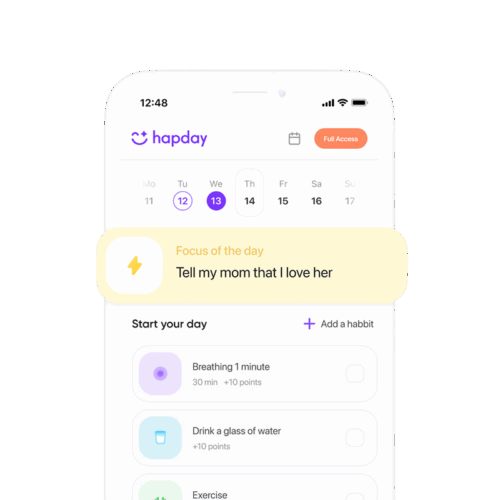
Ready to fortify your mindfulness practice and attain emotional balance? Uncover your potential with Hapday AI Life Coach, an app offering tailored, guided sessions. Take the first step at the Apple App Store and start your mindfulness journey.
Join 1.5M+ people using Hapday’s AI-powered tools for better mental health, habits, and happiness. 90% of users report positive changes in 2 weeks.