


Finding Emotional Wellbeing: Daily Self-Care Rituals
Table of Contents
- Defining Self-Care
- Unveiling the Science: Why Rituals Matter
- How to Rebalance: Practical Self-Care Rituals
- From Idea to Action: Building Emotional Fortitude
- Embracing Community
- Nurturing the Practice
- Concluding Thoughts: Your Personal Journey to Emotional Wellbeing
Key Takeaways
- Self-care is an intentional act essential for emotional balance and mental clarity.
- Simple daily rituals can activate calming responses in the body, promoting peace.
- Setting boundaries and practicing gratitude can significantly enhance emotional resilience.
- Building emotional strength requires small, consistent steps and community support.
Defining Self-Care
Self-care… it’s not merely indulgent evenings or boxes of luxury chocolates. It’s rather an intentional act—a commitment, really—of nurturing one’s health and emotional equilibrium. Recognized as a cornerstone of mental clarity and emotional robustness, self-care acts as an anchor.
“Self-care acknowledges your inherent value, arming you with strategies to navigate life’s stressors. To treat it as a luxury is a misinterpretation; it’s fundamental.”
— Dr. Sarah Chen, NYU
Back in 2018, an exhaustive study by the American Psychological Association hammered this home. Those diligently practicing self-care reported feeling less stressed and more gratified with life.
Unveiling the Science: Why Rituals Matter
Oddly enough, the science speaks volumes—simple routines can transform your mental landscape. Regular self-care acts activate what’s commonly called the parasympathetic nervous system. Ever heard of the “rest and digest” mode? That’s the one. This system encourages tranquility and recovery, a welcome respite from the go-go-go. Practices of mindfulness prompt the release of neurotransmitters like serotonin and dopamine, those magical chemicals tied to joy and wellbeing.
How to Rebalance: Practical Self-Care Rituals
Begin with Mindful Mornings
Harness the morning’s potential. Just try—tomorrow morning—wake without reaching for your phone. Take a few deep breaths. Let your lungs expand and release, situating yourself firmly here and now. Maybe note three things you’re grateful for, laying down a good path for your day. A Harvard study suggests such gratitude rituals bolster emotional resilience and happiness.
Compassionate Movement
Exercise often gets misconstrued as punishment rather than pleasure. Find your groove—be it through yoga, a walk, or an exhilarating dance class. Dana, at 32, stumbled upon the wonders of a quick 30-minute stroll to her neighborhood café, a ritual that revitalized her post-burnout at work.
“Physical activity reshapes your brain. It catalyzes the release of chemicals imperative for emotional wellness.”
— Dr. John Anderson, Mayo Clinic
Nourish with Care
Your dietary choices profoundly impact your mood. Essential nutrients, like omega-3 fatty acids, present in fish or flaxseeds, can boost brain function while curbing anxiety. It’s often said—a nutritious brain makes for a healthier mind. Echoing this, the CDC states diets rich in unprocessed foods correlate with better mental health.
Cultivating Boundaries
Practicing the art of saying “no” without accompanying guilt is invaluable. When you default to “yes,” your peace erodes. Setting boundaries becomes a self-care cornerstone. Emma, a diligent project manager, learned to restrict work emails to office hours, gifting herself unwind time in the evenings.
From Idea to Action: Building Emotional Fortitude
Deeply comprehending the why behind these rituals helps root them in daily life. Emotional resilience isn’t instantaneous; it’s built through continual, sometimes tiny, steps—like regular drops in a bucket.
Crafting Your Rituals: Simple Yet Impactful Suggestions
- Start with Baby Steps: Begin with a single ritual. Build from there to prevent overwhelm.
- Patience is Key: Missing a day doesn’t equate to failure. Progress isn’t always linear.
- Intentional Reflection: Dedicate five minutes weekly to evaluate your strides. It connects you back to why you began.
Embracing Community
Though self-care is personal, it doesn’t necessitate solitude. Sharing your path nurtures connection. Online communities and local workshops open platforms for idea exchanges and support.
“Community validates our experiences and can normalize challenges, easing feelings of isolation.”
— Dr. Heather Adams, Therapist
Nurturing the Practice
It can feel daunting to maintain self-care in an ever-spinning world, but let this be a reminder: rituals remain adaptable. They’re meant to morph as your life and needs do.
Concluding Thoughts: Your Personal Journey to Emotional Wellbeing
Embarking on a journey toward emotional wellbeing through daily self-care is intimate yet rewarding—a dance of self-discovery and sustained fortitude. You merit the love and presence that these rituals provide, incrementally, day by day.
As you craft spaces of peace and joy, remember: every small act contributes to fortifying your internal strength. Allow these practices to be both your refuge and illumination—a reliable guide as you continue navigating towards balanced living.
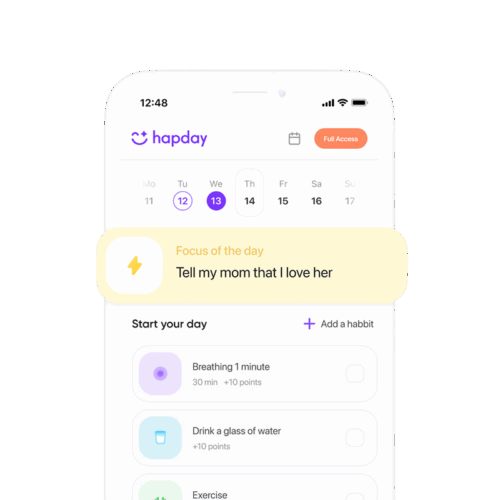
And should you seek structure, don’t hesitate to explore support. The Hapday AI Life Coach app, a modern companion, offers personalized habit tracking and wellness strategies to bolster your emotional journey.
The Bottom Line
Embracing self-care rituals is a crucial step towards emotional wellbeing. These practices not only enhance our resilience but also foster a supportive community, reminding us that we are not alone in our journeys.
Join 1.5M+ people using Hapday’s AI-powered tools for better mental health, habits, and happiness. 90% of users report positive changes in 2 weeks.