


Finding Inner Peace with Mindfulness Meditation
Table of Contents
- What Is Mindfulness Meditation?
- The Science of Mindfulness: Why Does It Work?
- Getting Started with Mindfulness Meditation
- Mindfulness Meditation in Action: Real-life Applications
- Cultivating a Sustainable Practice
- The Long-term Benefits of Mindfulness Meditation
- Embrace an Empowered Future Through Mindfulness
- Summary
What Is Mindfulness Meditation?
Mindfulness meditation, at its essence, is about anchoring oneself to the present—openly and without judgment. It’s about completely focusing on whatever you sense or think: your breath, bodily sensations, even the stream of thoughts racing through your mind.
“Mindfulness meditation is the art of attending to the here and now without grasping onto past regrets or future anxieties.”
— Dr. Sarah Chen, Clinical Psychologist, NYU
For many, as she states, it’s akin to “gently quieting the busy mind, bringing focus back to the richness of the present.” When Maya, a 28-year-old reflecting on her post-divorce life, embarked on her mindfulness journey, it was daunting. Initially, sitting still felt impossible, with her mind a whirlwind of ‘what-ifs.’ But then something marvelous happened. Dedicating just ten minutes a day to mindful breathing, she noticed the storm calm. It’s an experience countless others relate to.
The Science of Mindfulness: Why Does It Work?
Curious about the why? Recent scientific inquiries shed light on mindfulness meditation’s effectiveness. A Harvard University study unveiled that practicing mindfulness can transform brain structure and function, especially in areas tied to attention, emotion regulation, and decision-making (2021, Harvard University).
Mindfulness meditation activates the brain’s prefrontal cortex, the calming center, Dr. Emily Hart explains. By frequently engaging in mindfulness, you essentially rewrite your brain’s response to stress. This is validated by long-term practitioners, noting resilience and significantly reduced stress levels.
Getting Started with Mindfulness Meditation
Ready to start? Here are small, realistic steps to ease into it:
- Start Small and Build Gradually: You don’t have to dive into hour-long sessions. Start with just five minutes each morning, sitting quietly, and focusing on your breath.
- Focus on Your Breath: Notice how your chest and belly expand with each deep inhalation through your nose, and release tension with each gentle exhale through your mouth.
- Acknowledge Thoughts When They Arise: Expect thoughts to intrude. When they do, redirect your focus back to your breath. This gentle repetition gradually strengthens your focus.
- Use Guided Meditations or Apps: Apps like Calm or Insight Timer offer guided meditations, providing invaluable support, especially for beginners.
- Incorporate Mindfulness in Daily Activities: Bring mindfulness into everyday tasks—be it walking, eating, or listening—helping to deepen your overall sense of well-being.
Mindfulness Meditation in Action: Real-life Applications
Take David, a project manager in his mid-thirties. Swamped by work? Integrating mindfulness into his routine sparked a striking change.
“I was skeptical at first,” David admits. “But focusing on my breath, even while at my desk or on breaks, made a huge difference. I felt less reactive, more focused, and able to manage challenges with a clear mind.”
— David, Project Manager
Whether overwhelmed by work, studies, or personal life, those brief moments of awareness can radically alter stress experiences.
Cultivating a Sustainable Practice
Integrating mindfulness meditation into life takes persistence, patience, and self-kindness. Here’s how to keep it going:
- Create a Dedicated Space: No need for extravagance. A simple corner with a cushion or chair can become a meditation haven.
- Set Realistic Goals: Focus on consistency over session length. Remember, daily practice is more important.
- Join a Community: Engage with meditation groups, online or in-person. Sharing journeys can be mighty motivating.
- Celebrate Progress, Not Perfection: Acknowledge small victories. A quieter mind today than yesterday? Celebrate these moments—they’re milestones towards peace.
The Long-term Benefits of Mindfulness Meditation
Stick with it, and mindfulness meditation unveils benefits beyond stress relief. A 2018 meta-analysis in JAMA Internal Medicine noted improvements in emotional regulation, sleep quality, and cognitive function. Consistent practice spikes gray matter concentration in brain areas linked to learning, memory, and emotional regulation.
Embrace an Empowered Future Through Mindfulness
Feeling adrift or overwhelmed? Remember: Embracing peace through mindfulness doesn’t demand changing who you are. It’s about recognizing where you are. You’re capable of restoring balance and inviting calm into life through purposeful practice.
Key Takeaways
- Mindfulness meditation helps anchor you to the present and alleviates anxiety.
- Scientific studies confirm its efficacy in transforming brain function related to emotion and stress.
- Starting with small, manageable practices can lead to significant changes over time.
- Consistency and community support are key for sustaining a mindfulness practice.
- The benefits extend beyond stress relief, improving emotional regulation and cognitive function.
The Bottom Line
Mindfulness meditation offers a pathway to restore balance and peace in your life. By integrating this practice, you’re not just seeking to reduce stress; you’re empowering yourself to embrace life fully, transforming each moment with presence and awareness.
Summary
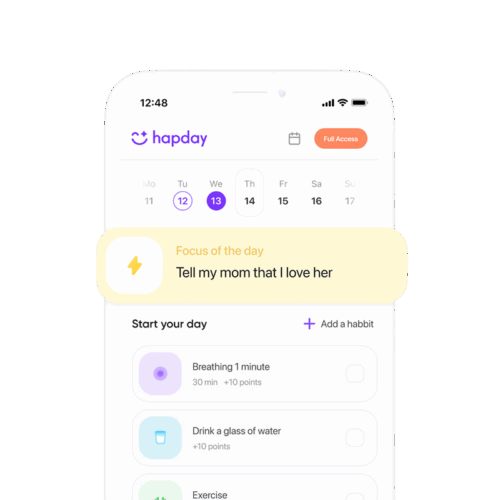
Fundamentally, mindfulness meditation guides us to awaken to the present—helping carve a path to emotional balance and lifelong wellness. Ready to dive deeper? Discover mindfulness’s power with Hapday AI Life Coach. Explore new mindfulness levels with 24/7 guidance and tailored programs for a life of peace.
References:
Join 1.5M+ people using Hapday’s AI-powered tools for better mental health, habits, and happiness. 90% of users report positive changes in 2 weeks.