

How to Cultivate Inner Calm Through Mindful Living
Table of Contents
- Why Mindfulness Matters—The Science Behind It
- Mindful Living—Maya’s Story
- Embracing Presence—The Heartbeat of Mindful Living
- Everyday Mindfulness—Simple Practices
- The Reset Ritual—Mindful Breathing
- Cultivating a Mindful Mindset—Built for Long-Term Serenity
- Charting Your Mindful Path
- Building a Mindful Life—Commitment and Compassion
- The Empowering Path Ahead
Why Mindfulness Matters—The Science Behind It
Before we dive headfirst into practice, let’s unravel why mindfulness holds such power. According to the American Psychological Association, mindfulness can significantly reduce stress, enhance emotional regulation, and boost overall well-being (American Psychological Association). It’s not just hype. There’s actual science—like how a group of Harvard neuroscientists found that meditation can increase gray matter density in parts of the brain like the hippocampus, pivotal for memory and learning. These changes really do help with managing emotions, say the experts.
“I believe mindfulness creates space between what we perceive and how we react. It lets us engage with life more intentionally, fostering peace even amid chaos.”
— Dr. Sarah Chen, NYU
What a reassuring thought, isn’t it?
Mindful Living—Maya’s Story
Consider Maya, 28. After an arduous divorce, she found herself drowning in regrets and a maze of ‘what-ifs.’ Her sense of self? Shattered. Enter mindfulness, introduced by a supportive friend. It wasn’t a quick fix, but gradually, weaving mindful practices into her days helped Maya reclaim a fraction of peace she’d lost.
Embracing Presence—The Heartbeat of Mindful Living
Let us dive into the core of mindful living—being present. We often get trapped in the past or lose ourselves, worrying about the future. Mindfulness, however, nudges us back to now.
Try this simple exercise: inhale deeply and feel the air fill your lungs, then slowly exhale… This basic act of awareness can re-anchor you to the moment, making intrusive thoughts fade.
“Mindful presence isn’t about halting thoughts; it’s about reshaping how you relate to them.”
— Dr. Rajiv Amarnath, Stanford’s Center for Compassion and Altruism Research
Everyday Mindfulness—Simple Practices
Infusing mindfulness into daily life needn’t be daunting. Small, intentional acts can help nurture calm, even in the midst of hectic days.
Mindful Mornings
Begin your day purposefully. Instead of plunging into tasks, take a few minutes for mindfulness. Sit quietly and experience your surroundings—what sounds do you hear? What do you feel? Such simplicity can anchor you.
Mindful Eating
Acknowledging how meals often become an overlook, try eating mindfully. Observe each bite—its flavors, textures, aromas. Not just sustenance, eating becomes a calming ritual.
Researchers from the University of Wisconsin-Madison showed that mindful eating enhances digestion and satisfaction.
Mindful Commutes
Every commute can become a mindful journey. Whether in a car or on public transit, notice the world passing by or the rhythm of your steps. This mundane transition morphs into a meditative experience.
The Reset Ritual—Mindful Breathing
When stress peaks, you need a reset. Mindful breathing—it’s free and accessible—offers instant relief. Make this a practice whenever tension swells.
Try: inhale for four counts, hold, then exhale slowly for four. Such breathing balances the nervous system, inviting a ripple of tranquility.
Cultivating a Mindful Mindset—Built for Long-Term Serenity
Mindfulness isn’t about banishing stress, but transforming your relationship with it. Over time, you build a mindset fortified for tumult—resilient against life’s whirlwind.
Simon, a 32-year-old entrepreneur, embraced daily mindful check-ins. When stress loomed, he acknowledged rather than fought it. In a few weeks, this acceptance empowered Simon to confront challenges without falling prey to anxiety.
“Cultivating a mindful mindset gifted Simon tools to face uncertainty head-on, nurturing peace through acceptance.”
— Dr. Chen
Charting Your Mindful Path
Mindfulness isn’t a one-size-fits-all approach. Different forms await your discovery; find what resonates with you.
- Mindful Meditation: A staple of mindfulness, meditation can be readily accessed through online guides or apps. Find a cozy spot—listen to visualizations and breathing exercises.
- Body Scan: Focus attention on each body part, noting sensations without criticism—this deepens physical awareness within the present moment.
- Guided Visualization: Let your imagination wander—envision yourself amidst peaceful landscapes, relieving stress as you go.
Building a Mindful Life—Commitment and Compassion
Remember, cultivating inner calm is a journey, not simply a destination. It’s about sustained effort and a healthy dose of self-kindness.
Expect life’s ebbs and flows; minds wander, despite efforts. No worries—embrace these imperfections. Such self-compassion is vital.
Maya’s journey reveals this truth: inner calm isn’t devoid of adversity. Instead, it assures stability despite life’s tempests.
The Empowering Path Ahead
Now equipped with tools, insights, and fact-backed strategies, your path to inner calm can begin through mindful living. As you embark, remember: it’s all about being present, patient, and open-hearted.
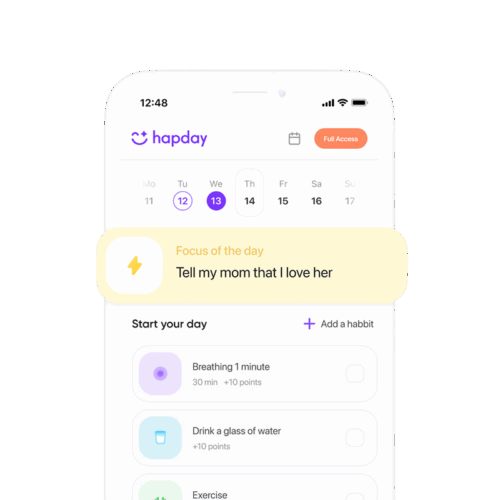
For those desiring a bit of tech support, consider the Hapday AI Life Coach app. It provides guided meditation, wellness tips, and even habit-tracking, all available at your fingertips—24/7 mind you. Available for download here.
Through mindful living, learn the art of presence, with your heart open. Your inner calm is your companion, just a mindful breath away.
Key Takeaways
- Mindfulness significantly reduces stress and enhances emotional well-being.
- Being present in the moment can help manage overwhelming thoughts.
- Simple practices like mindful eating and mindful commuting nurture calm.
- Mindful breathing can provide immediate stress relief.
- Cultivating a mindful mindset transforms your relationship with stress.
The Bottom Line
Embarking on a journey of mindful living can empower you to find peace amid chaos. With consistent practice and a compassionate approach, inner calm can be achieved, enhancing your resilience against life’s challenges.
Join 1.5M+ people using Hapday’s AI-powered tools for better mental health, habits, and happiness. 90% of users report positive changes in 2 weeks.