


How to Do a Body Scan: Mindfulness for Beginners
Picture this: it’s 11:47 p.m. You promised yourself you’d be asleep by ten, yet your mind keeps vaulting between tomorrow’s emails and last week’s offhand remark. The chest tightens; the breath skims the surface. Another scroll through headlines that only wind you tighter, then the phone drops to the nightstand with a thunk. I’ve been there—too often. In moments like this, a body scan is a modest door back into the room you actually live in. No gear. No guru. Just a quiet, practical way to inhabit your own skin again.
A body scan is one of the most forgiving entry points into mindfulness for beginners. It’s structured enough to follow on a hard day and simple enough to repeat when your schedule buckles. The kicker: it’s not just wellness lore passed along in yoga studios. The National Institutes of Health’s integrative health arm notes that steady mindfulness practice can reduce perceived stress and support overall well-being. Harvard Health has spotlighted research, including a 2014 review, pointing to moderate improvements in anxiety and depressive symptoms with mindfulness training. My view, after reporting on this for years? The technique endures because it asks so little and often gives more than it takes.
Table of Contents
- Why a body scan helps when your thoughts won’t slow down
- A grounded mini case study
- How to do a body scan: why it works before how it works
- How to do a body scan, step by step
- What if it’s hard to feel your body?
- How to do a body scan in daily life
- A gentle script you can use
- Safety notes for sensitive nervous systems
- How to do a body scan when you’re short on time
- Tracking change without obsessing over results
- When practice meets real life
- Troubleshooting common obstacles
- How often to practice
- Quick reminders that make the practice stick
- How to do a body scan: your next gentle step
- 60-second takeaway and next step
- The Bottom Line
- References
Key Takeaways
- A body scan shifts attention from thoughts to sensations, engaging the parasympathetic “rest-and-digest” response and easing stress.
- Start small—2 to 10 minutes—and prioritize consistency over duration; micro-practices throughout the day count.
- Follow a simple toes-to-crown sequence; wandering minds are normal—the return is the practice.
- Use trauma-sensitive options: eyes open, outer anchors, or a single neutral body area; seek professional guidance if needed.
- Track light changes (warmth, softer breath, steadier mood) without chasing results; benefits are cumulative.
Why a body scan helps when your thoughts won’t slow down
Anxious brains forecast impact; bodies follow suit. Muscles brace, breath shortens, the storyline accelerates. A body scan disrupts that reflex by shifting attention from narrative to sensation—temperature, pressure, pulsing, or even the absence of feeling. That redirection engages interoception (our internal sensing system) and nudges the parasympathetic “rest-and-digest” response to the front of the room.
“Mindfulness isn’t about emptying your mind. It’s about choosing where to place attention, moment by moment. A body scan offers a map. You visit each region, notice what’s present, and the system recalibrates. Over time, the body learns it’s safe to soften.”
— Dr. Lina Park, PhD, clinical psychologist and certified MBSR teacher
Subjectively, people describe feeling steadier; the data doesn’t argue. The NIH’s National Center for Complementary and Integrative Health reports reductions in perceived stress and improvements in sleep and mood for some participants in mindfulness programs. Harvard Health has summarized evidence that these practices can ease anxiety and mental stress. The Mayo Clinic underscores benefits for calm and clarity—what clinicians often call improved emotional regulation. And interest isn’t niche anymore: a CDC analysis shows U.S. adults reported practicing meditation more than threefold from 2012 to 2017. If you’re learning how to do a body scan, you’re joining a crowded, hopeful corridor.
A grounded mini case study
When Maya, 28, was navigating a divorce last year, most of her attention hovered outside her body, orbiting what-ifs and logistics. Nights were the worst; jaw clenched until morning. She tried five-minute body scans before bed—no incense, no soundtrack. “At first, I couldn’t feel anything but restlessness,” she told me over tea. “Then I noticed tingling in my calves. After a week, I realized my breath kept deepening on its own. Not a miracle—more like I finally had a dimmer switch for my stress.” I believe stories like Maya’s matter because they reflect the ordinary ways change actually happens: gradually, imperfectly, and often while we’re not looking.
How to do a body scan: why it works before how it works
Before technique, a quick why. The body scan invites a stepwise tour of your physical landscape, often toes to crown. You meet what’s there—warmth, coolness, tightness, buzzing—rather than arguing with it. This practice builds distress tolerance, a skill psychologists lean on because it stretches our capacity to stay with discomfort without bolting. From a journalist’s seat, that quality—staying with—feels like the quiet heart of this work.
“A curious, nonjudgmental focus on the body sends a safety signal. You’re showing the brain it doesn’t need to live in threat mode. With repetition, reactivity drops and emotional tone steadies.”
— Aaron Patel, MD, psychiatrist
That’s the promise worth testing in your own life.
How to do a body scan, step by step
If you’re new to mindfulness for beginners, set a timer for 5–10 minutes. Reading these steps slowly into a voice memo and playing it back can help pace you.
- Set your position
Lie on your back with a pillow under the knees, or sit supported with both feet on the floor. Hands rest where they can be forgotten. Eyes close if that feels safe; otherwise, soften the gaze. - Set your intention
Name it quietly: “I’m practicing a body scan to befriend my body and reduce stress—one breath at a time.” A sentence is enough. - Anchor in breath
Take three natural breaths. Let the exhale loosen the shoulders and the jaw. No engineered “deep breathing.” Allow the body to lead. - Start at the feet
Place attention on the toes—left, then right. Sense temperature, tingling, pressure, or nothing at all. If it’s nothing, that counts. - Move to soles and heels
Sweep attention through arches, balls, and heels of each foot. Picture a small beam of light meeting each spot. - Calves and shins
Sense the fronts and backs of the lower legs. If you find tension, note it, breathe once with it, and continue. - Knees and thighs
Travel through kneecaps and the backs of the knees, then quads and hamstrings. Let gravity carry more of the work. - Hips and pelvis
Notice the contact points with chair or floor. If possible, soften the belly on the exhale. - Low back and abdomen
Feel the rise and fall of the abdomen and the quiet curves of the lower back. Think spacious on the out-breath. - Chest and upper back
Sense the rib cage expanding and settling. Imagine the shoulder blades sliding toward the earth. - Hands and arms
Visit fingers, palms, wrists, forearms, elbows, upper arms. What textures or micro-sensations are present? - Neck, jaw, face
Scan the throat, jaw, mouth, cheeks, eyes, forehead. Unclench the small muscles. Let the tongue be heavy. - Crown of head and whole body
Land at the top of the head, then zoom out to include the body as one piece. Feel the field of sensation you’re living in. - Close with kindness
A hand to heart or belly if you like. Offer a quiet thanks to the body for carrying you. End gently—no verdict on how it went.
If your focus wanders a hundred times, that is the training. The return is the rep. I’d argue that’s the most humane part of this practice.
What if it’s hard to feel your body?
Numbness, fidgeting, even an uptick in anxiety at first—common, not a failure. For some, turning inward stirs long-shelved feelings; for others, it’s simply unfamiliar terrain. Patience helps more than precision here.
“Start smaller than you think. If a full-body scan floods you, pick a neutral zone—like the hands—and rest there for a minute. Bite-sized and repeatable is the sweet spot.”
— Dr. Lina Park, PhD, clinical psychologist and certified MBSR teacher
Try these adjustments:
- Keep eyes open with a soft, steady focus.
- Shorten the scan to 3–5 minutes.
- Choose one area only (hands, feet, or shoulders).
- Add micro-movement: gently flex and release the area you’re sensing.
How to do a body scan in daily life
You don’t need a mat to practice. Thread micro scans into ordinary moments:
- While waiting for coffee, feel both feet for three breaths.
- Between meetings, track shoulders and jaw; soften on the exhale.
- In transit, notice contact points—seat, hands, feet. Name three sensations.
“The magic of a body scan is that any moment becomes a landing pad. Thirty seconds can interrupt autopilot and reconnect you.”
— Sophia Reyes, E-RYT 500, mindfulness educator
A gentle script you can use
Prefer words to follow? Try this—slowly, like you’re speaking to someone you care about:
“Nothing to fix right now. Meet the breath as it is. Bring attention to the toes of the left foot. Notice warmth, coolness, weight, or nothing. Move to the sole, the heel, the ankle. Drift up through calf and shin, knee and thigh. Let attention be friendly. Scan the right leg the same way. Soften the belly, feel breath come and go. Notice the low back and upper back, the chest rising and settling. Sense hands and arms, from fingertips to shoulders. Allow the neck to lengthen, the jaw to un-grip. Feel cheekbones, eyes, forehead soften. Rest at the crown. Now sense the whole body, held by gravity and breath. Stay for three easy breaths. When ready, open the eyes.”
Safety notes for sensitive nervous systems
If you have a history of trauma, panic, or dissociation, parts of a body scan might feel too much. That isn’t a mistake—it’s information. Consider:
- Eyes open with a soft gaze.
- Keep attention on outer anchors (sounds, room temperature) rather than inner ones.
- Choose one area that feels neutral or safe.
- Seek guidance from a therapist trained in trauma-sensitive mindfulness.
The NIH’s NCCIH notes that while meditation is generally safe, difficult emotions can surface; starting small and tracking your comfort is wise. My stance: go gently, and keep choice at the center.
How to do a body scan when you’re short on time
Two-minute reset:
- Twice, exhale longer than you inhale.
- Feel both feet. Name one sensation per foot.
- Scan shoulders, jaw, eyes; soften each on the out-breath.
- Name one feeling without fixing it: “Worried.” “Tired.” “Okay.”
- Return to your next task.
Five-minute focus:
- 1 minute: Breath anchor.
- 2 minutes: Feet to hips.
- 1 minute: Hands and shoulders.
- 1 minute: Face and whole-body awareness.
Fifteen-minute unwind:
- Follow the full sequence, pausing 30–60 seconds per region. A steady way to meet bedtime rather than chase it.
Tracking change without obsessing over results
You might register small shifts—warmer hands, a softer voice, a steadier inhale-to-exhale. They count. The Mayo Clinic points out that regular meditation fosters calm and balance with ripple effects on health and mood. If you like data, keep it light with a quick journal check:
- Before: What sensations are most noticeable?
- After: What changed, if anything?
- One word for right now.
When practice meets real life
Jay, 32, was drowning in deadlines this spring. He saved a five-minute scan on his phone and set three daily alerts. “I assumed I needed 45 minutes to meditate,” he told me. “Turns out I needed five minutes, reliably.” Nothing fireworks-level at first. By week three, jaw tension dropped, afternoon headaches faded. This is how learning how to do a body scan often works: unshowy, cumulative, real.
Troubleshooting common obstacles
- “I fall asleep.” Try sitting upright or practicing in the morning.
- “I get bored.” Shorten the practice and sharpen curiosity—what’s new here, even by a hair?
- “I feel overwhelmed.” Stay at the edges (hands/feet) or return to sound in the room.
- “I don’t have time.” Pair the scan with anchors you never skip: brushing teeth, opening the laptop, meal breaks.
“Perfectionism sneaks into mindfulness, too. If ‘no thoughts’ is your bar, you’ll always feel behind. Success is noticing and returning. That’s it.”
— Aaron Patel, MD, psychiatrist
I’d add: kindness to yourself changes the texture of practice more than any technique tweak.
How often to practice
Consistency eclipses duration. Aim for 5–10 minutes most days, with a longer session on the weekend if it feels good. The CDC’s guidance on coping with stress emphasizes daily, repeatable supports; a mini body scan fits that bill. From my notebook: the people who benefit most aren’t the most intense—they’re the most consistent.
Quick reminders that make the practice stick
- Gentle tone: Speak to yourself like someone you want to keep.
- Small goals: Two to five minutes is plenty to begin.
- Repeat often: Link the scan to routines you already trust.
- Track lightly: Notice benefits without chasing outcomes.
- Get support: A guided recording or class can build momentum when willpower is thin.
How to do a body scan: your next gentle step
If you’re still reading, your nervous system may already be easing down a notch. The invitation is simple: try one brief scan today, another tomorrow. Let it be imperfect, human. Learn how to do a body scan as a friendship, not a fix. Life will speed up again—it always does—and you’ll have a practiced way to find your footing.
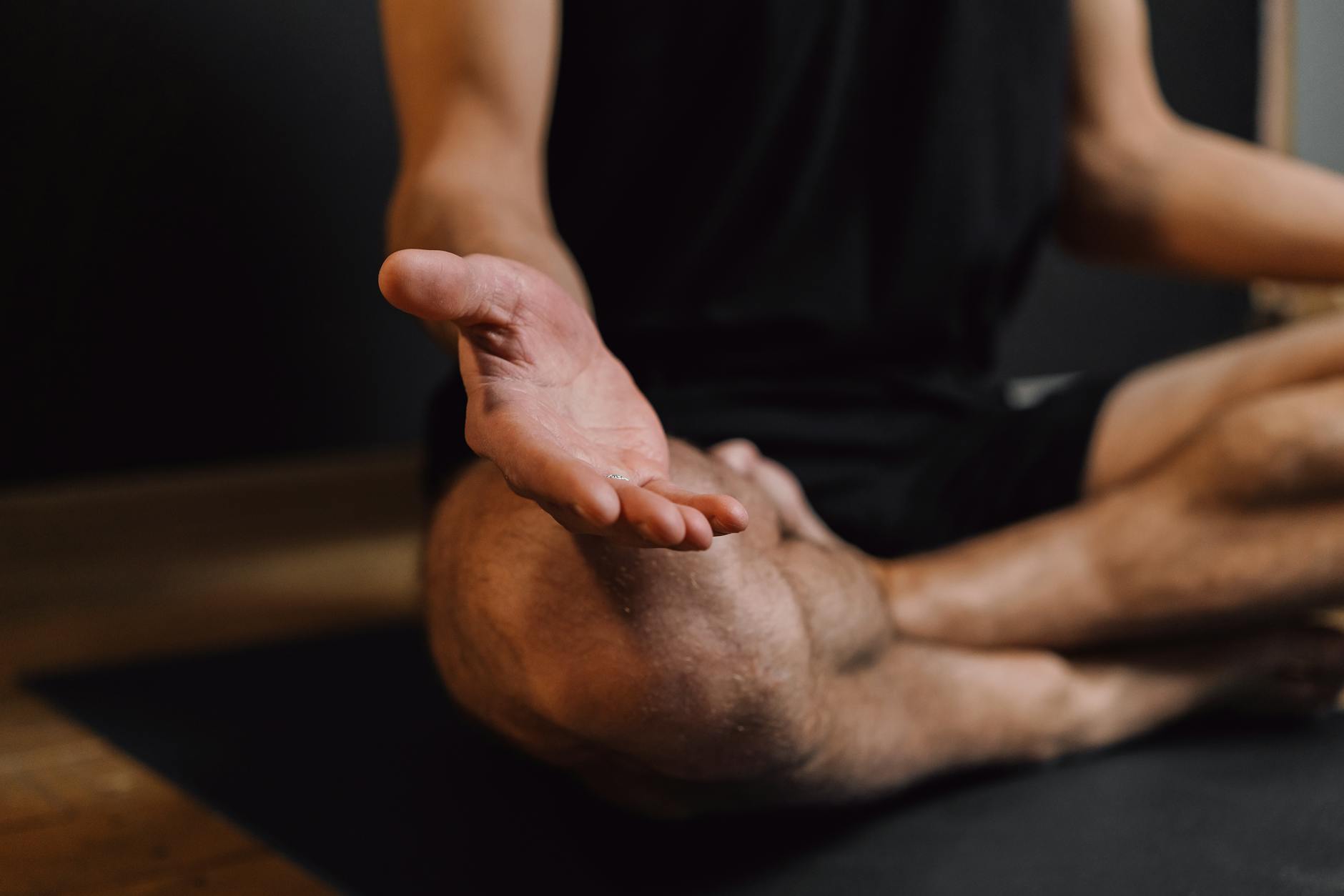
Image alt: Person lying on a yoga mat at home, eyes closed, practicing how to do a body scan for mindfulness and stress relief
60-second takeaway and next step
When thoughts won’t quit, a body scan shifts you from thinking to sensing. Stress eases, clarity returns. The research base is steady, and you can start small—2 to 10 minutes, most days. Try it tonight; notice tomorrow’s quiet ripple.
Want steady support? Try Hapday AI Life Coach for 24/7 guided sessions, habit tracking, and personalized wellness programs: https://apps.apple.com/app/hapday-ai-life-coach/id1498572982
The Bottom Line
A body scan is a simple, sustainable way to settle your system and reclaim attention. Start where you are, make it short and repeatable, and let practice be kind. Over time, ease grows—and so does your capacity to meet life as it comes.
References
- National Center for Complementary and Integrative Health (NIH) – Meditation and Mindfulness: What You Need To Know
- National Center for Complementary and Integrative Health (NIH) – Relaxation Techniques for Health
- Harvard Health Publishing – Mindfulness meditation may ease anxiety, mental stress
- Mayo Clinic – Meditation: A simple, fast way to reduce stress
- Centers for Disease Control and Prevention (CDC) – Coping with Stress
- CDC, National Center for Health Statistics – Use of Yoga, Meditation, and Chiropractors Among U.S. Adults, 2017
Join 1.5M+ people using Hapday’s AI-powered tools for better mental health, habits, and happiness. 90% of users report positive changes in 2 weeks.