



How to Navigate Emotional Resilience in Our Ever-Changing World
Contents
Understanding and Embracing Your Emotions
A crucial starting point for building emotional resilience is learning to recognize and own your emotions—without the self-critique. Sounds simple? Not always. Emotional awareness is about acknowledging what you feel as those feelings bubble up, which can be harder than it seems in a fast-paced world. From several studies, it’s evident: labeling your emotions can significantly cut down their intensity, paving the way for clarity when everything feels muddled.
Practical Tip: Consider starting a daily journaling habit. Reflect on your emotional rollercoasters in your own words. This exercise promotes an inner dialogue—and, quite frankly, boosts self-awareness, which is vital for emotional resilience.
The Power of a Growth Mindset
Embracing a growth mindset can change the game when it comes to emotional resilience. Carol Dweck, a name many might recognize, popularized this fundamental perspective. It encourages us to see challenges not as insurmountable obstacles, but as opportunities for personal development. According to her research, folks with a growth mindset generally enjoy more success and better emotional health. Who doesn’t want that?
Practical Tip: Try reframing setbacks as valuable learning experiences. Encountering a bump in the road? Ask yourself, “What lesson is hidden here?” or “How, exactly, can this push me to grow?”
Build That Support Network
Having strong social connections is a pillar of emotional well-being. Harvard’s extensive research tells us that nourishing relationships greatly enhance happiness and help manage stress. A supportive network—be it family, friends, or like-minded groups—is your safety net. It can offer not just emotional uplifting but practical help when things get tough.
Practical Tip: Prioritize those relationships that uplift you. Keep in touch with friends, dive into community groups that call to you, or join group activities. It’s all about expanding that precious circle of support.
Engage in Mindfulness Practices
Mindfulness, often touted these days, is about staying present and truly living in the moment. What’s fascinating is how it’s closely tied to enhancing emotional resilience. Research from APA supports the benefits—mindfulness really helps with regulating emotions and curbing anxiety and depression.
Practical Tip: Introduce simple mindfulness exercises in your life. From mindful breathing to short meditations, even apps like Headspace and Calm can guide you to be more present, hence fostering resilience.
Self-Care: Essential, Not Selfish
Is self-care a luxury? Absolutely not. It’s a non-negotiable for cultivating emotional resilience. The World Health Organization emphasizes lifestyle factors like sleep, nutrition, and exercise in promoting mental health. By prioritizing self-care, you arm yourself with the resources needed to ride emotional storms.
Practical Tip: Devise a self-care routine. Include regular activity, balanced eating, rest, and pursuits that genuinely bring you joy. Your emotional resilience bank will thank you.
The Gratitude Practice
Tapping into gratitude doesn’t just boost your mood; it enhances emotional strength. According to a study in the Journal of Happiness Studies, gratitude can increase happiness and foster resilience. Adversity might knock, but with gratitude, you’re better prepared to open that door.
Practical Tip: Begin or end each day by listing three things you’re grateful for. This practice nudges your mind towards focusing on positives, strengthening emotional resilience step by step.
Enhance Problem-Solving Skills
Robust problem-solving skills equip you to handle life’s curveballs with more adeptness, and they feed into nurturing emotional resilience. People who are strategic in solving issues experience less stress in tricky situations—as shown in various studies.
Practical Tip: Get into activities that stimulate your brain—puzzles, strategy games, etc. When life throws a curveball, dissect the problem into smaller parts and brainstorm solutions.
Self-Regulate Emotionally
To manage emotions wisely is, without doubt, crucial for bumping up your emotional resilience. The APA highlights the ability to focus, avoid toxic reactions, and bounce back from distress as essential.
Practical Tip: Introduce calming techniques into your routine. Deep breathing, or progressive muscle relaxation, can act as anchors when emotional tides swell.
Conclusion
Boosting emotional resilience is an evolving journey—a process with no endpoints. By getting to grips with your emotions, adopting a growth mindset, fostering social bonds, and prioritizing self-care and mindfulness, you’re building lasting emotional strength. Each strategy here intertwines with the others, offering a robust structure to help navigate life’s ebbs and flows.
Call to Action: Are you ready to start your journey toward strengthened emotional resilience? Take these strategies, weave them into your life, and empower yourself. Meet life’s challenges with newfound grace and robustness.
References
- Dweck, C. S. (2006). Mindset: The New Psychology of Success. Random House.
- American Psychological Association. (n.d.). The road to resilience.
- Lyubomirsky, S., & Layous, K. (2013). How do simple positive activities increase wellbeing? Current Directions in Psychological Science, 22(1), 57-62.
- Harvard Health Publishing. (2021). The health benefits of strong relationships.
- World Health Organization. (2014). Mental Health: A State of Well-being.
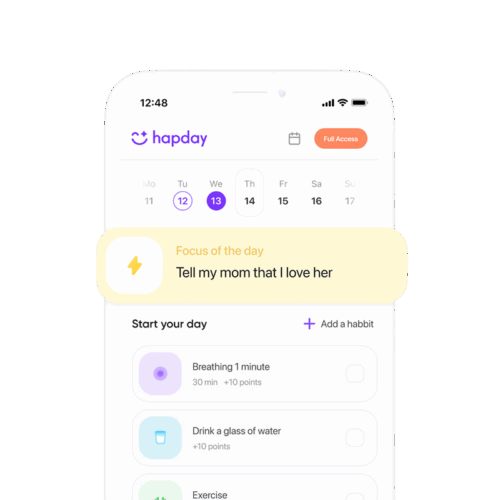
Join 1.5M+ people using Hapday’s AI-powered tools for better mental health, habits, and happiness. 90% of users report positive changes in 2 weeks.