


Finding Emotional Wellbeing: Daily Self-Care Tips
Table of Contents
- The Science of Self-Care
- Daily Self-Care Tips
- Morning Mindfulness
- Journaling Your Thoughts
- Nourishing Your Body
- Moving with Purpose
- Cultivating Connection
- Embracing Creativity
- Moving Forward
- The Bottom Line
- References
Key Takeaways
- Emotional wellbeing is crucial for handling life’s challenges and forming meaningful connections.
- Daily self-care practices can significantly reduce stress and enhance mood.
- Practical self-care activities include mindfulness, journaling, nutrition, physical movement, social connection, and creativity.
- Self-care should be approached with patience and gentleness for personal growth.
The Science of Self-Care
Before diving into the “how,” let’s explore the “why.”
“It refills your mental reserves. Without it, functioning optimally and handling life’s hiccups becomes a daunting task.”
— Dr. Sarah Chen, Clinical Psychologist
Self-care triggers our parasympathetic nervous system—the “rest-and-digest” one—offsetting the fight-or-flight instincts that stress ignites. According to the National Institute of Mental Health, daily acts of self-care—such as mindfulness or light exercise—can cut stress hormones considerably. One might even think back to 2021, when it seemed everyone was exploring mindfulness.
Daily Self-Care Tips
Morning Mindfulness
Picture yourself starting each day with some serene moments just for you. Mindfulness, beyond the hype, is a validated practice boosting emotional wellbeing. When Maya integrated mindfulness meditation into her mornings, she surprisingly found her stress levels plummeting.
“Such practices enhance neuroplasticity, thus building resilience to stress.”
— Dr. Matthew Brooks, Mindfulness Coach
Journaling Your Thoughts
Using a journal as a conduit for emotions can be enlightening. Beyond anecdotal evidence, research from the University of Rochester Medical Center has shown that expressive writing can significantly elevate mood and alleviate anxiety. Who knew?
Nourishing Your Body
Self-care transcends mental practices; nutritional choices matter too. Omega-3s, anyone? Harvard studies have emphasized how diet impacts mood and emotional health.
“Your gut influences your mental state enormously.”
— Dr. Roger Underwood, Nutritionist
Moving with Purpose
When Maya hit rock-bottom, movement became her refuge. Physical activity naturally uplifts mood by boosting endorphins—nature’s happy pill. Harvard Health often discusses exercise’s power in combating anxiety and depression.
Cultivating Connection
We’re social at heart. Solid connections spell happiness and belonging. Loneliness, on the contrary, intensifies depression odds.
“Real connections, be they virtual or face-to-face, can mitigate stress and bolster emotional strength.”
— Dr. Linda Garner, Social Psychologist
Embracing Creativity
Creativity opens a mental sanctuary beyond words. Artistic activities—painting, music, poetry—heighten self-awareness and emotional wellbeing. The Journal of Positive Psychology reported that creative endeavors can notably reduce stress.
Moving Forward
Exploring these daily self-care practices is an inherently personal venture requiring patience and a gentle touch for oneself. By prioritizing self-care, you’re crafting a firm foundation for confronting life’s ebb and flow.
Maya eventually rediscovered her equilibrium post-divorce, and you too can foster balance and nurture emotional health, one day at a time. Where do you begin? Right here, right now. Recognize today’s status and gently reach for your desired destination.
The Bottom Line
Self-care isn’t indulgence—it’s imperative. By implementing daily practices, you are actively working towards emotional wellbeing and enhancing your overall quality of life.
References
- American Psychological Association
- National Institute of Mental Health
- Harvard Health Publishing
- World Health Organization
- University of Rochester Medical Center
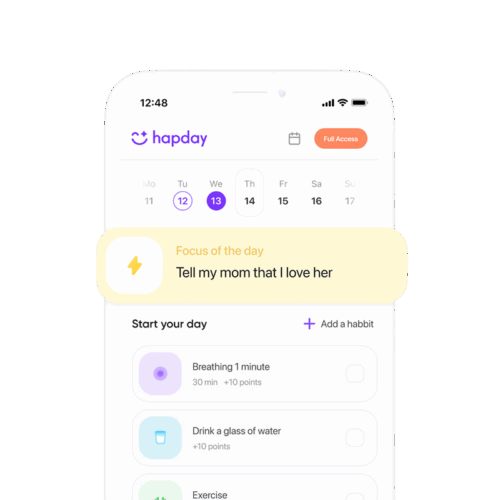
Join 1.5M+ people using Hapday’s AI-powered tools for better mental health, habits, and happiness. 90% of users report positive changes in 2 weeks.