


Finding Emotional Wellbeing: Daily Mindful Practices
On an icy morning, with the cold creeping into her bones, Emily found herself wrestling with familiar anxiety. She had the trappings of success—a thriving career, a loving family—yet that wasn’t enough. Can you relate? Those moments of feeling unmoored and overwhelmed can often sneak up on us. Emily sought change and turned to daily mindful practices, embarking on a gentle journey toward emotional wellbeing. This wasn’t magic; it was more a process of patient exploration. The question is, have you ever felt that pull towards serenity amid the chaos that is life today? Embracing mindful practices could just be that sanctuary you’ve been searching for.
Table of Contents
- The Quest for Peace in Modern Chaos
- Why Mindfulness Works
- Daily Mindful Practices for Emotional Wellbeing
- Navigating Challenges with Mindfulness
- The Science of Emotional Resilience
- Building Your Mindful Practice
- A Path to Emotional Freedom
- Looking Ahead with Hope
Key Takeaways
- Mindful practices are essential for emotional wellbeing in today’s chaotic world.
- Regular mindfulness can enhance emotional resilience and awareness.
- Consistency in practicing mindfulness is more important than perfection.
- Employ small, everyday moments to integrate mindfulness into your life.
- Cultivating mindfulness is a long-term journey, akin to gardening.
The Quest for Peace in Modern Chaos
In today’s fast-paced world, busyness is worn like a badge of honor. Have we lost sight of stillness, mistaking it for idleness? It’s easy to feel emotionally drained, just like Emily. But let’s be clear, striving for emotional wellbeing doesn’t mean banishing stress. Rather, it’s about building resilience to life’s little storms. Mindfulness anchors us, offering a momentary escape from the endless chatter of our minds. Remember Dr. Sarah Chen? That NYU psychologist?
“Mindfulness acts as a bridge to our innermost thoughts and feelings. By nurturing this connection, we can better understand our emotional landscapes.”
— Dr. Sarah Chen, NYU Psychologist
Why Mindfulness Works
Mindfulness isn’t just trendy jargon — it’s steeped in ancient wisdom. Imagine being present in each instant, without judgment clouding the view. It’s no wonder a Harvard study suggests mindfulness can cut stress, boost cognitive flexibility, and enhance emotional regulation. Our brains, particularly the prefrontal cortex—the very area that handles decision-making and emotional balance—stand to benefit greatly. For Maya, at 28 and freshly divorced, mindfulness was her refuge. Her practice didn’t ignore her pain; rather, it reshaped her relationship with it, granting her clarity and healthier emotional reactions.
Daily Mindful Practices for Emotional Wellbeing
- Mindful Breathing
Picturing this: You’re lost in worries about tomorrow or stuck on yesterday’s blunders. Mindful breathing can nudge you gently back to the present. Focus on each breath, let go with every exhale. Some scientific studies (think Mayo Clinic) show it activates the parasympathetic nervous system, ushering in relaxation. - Body Scan Meditation
This isn’t just unwinding—it’s tuning in. Listening to your body from the ground up, you build a deeper connection with yourself. You can ease tension you never knew you were holding, becoming more aware of your own physical state. - Gratitude Journaling
Transformative power lies in gratitude, so they say. UCLA studies confirm that listing your blessings can pivot your viewpoint from scarcity to abundance. Say it with me: This rewires your brain, enhancing emotional wellbeing. - Mindful Eating
Ever rushed through a meal because your schedule demanded it? Tasting each bite, savoring textures and aromas—mindful eating—can become a grateful celebration of nourishment. It’s amazing how this simple act can improve digestion and appreciation. - Walking Meditation
Walking isn’t just getting from A to B. Turn it into a meditation in motion by savoring each step, tuning into your rhythm and the environment. It’s therapy, really—clearing mental fog while grounding you in the now.
Navigating Challenges with Mindfulness
Let’s be honest, integrating these practices daily isn’t always a walk in the park. The hardest part? Consistency. Life pulls us in all directions, doesn’t it? But hey, perfection isn’t the goal. Mindfulness is forgiving, a practice of gently refocusing, even when the mind drifts.
“It’s natural to drift in and out of mindfulness. The beauty of this practice is in its forgiving nature. Short moments truly add up—more than you’d think.”
— Dr. Raj Mehta, Stanford
The Science of Emotional Resilience
Emotional resilience isn’t about erasing stressors but altering how we interact with them. The American Psychological Association found mindfulness boosts emotional resilience by beefing up acceptance, elevating emotional awareness, and taming reactivity. When Emily started embracing mindful habits, she noticed a subtle yet powerful shift. Stress no longer felt like an unbeatable enemy; instead, it became a cue to reconnect with her true self.
Building Your Mindful Practice
Ramping up a mindful practice doesn’t take grand moves. Start small. Ever think sticky notes could be the start of something big? Stick ’em where you’ll see ’em, reminding you to breathe or say thanks. Turn daily routines—showering, dish-washing—into moments of focus and meditation. This isn’t a race amigo, it’s a deeply personal exploration.
A Path to Emotional Freedom
What’s cultivating a mindful practice like? Think of it as gardening. Requires patience, and care. As you cultivate, expect to find a growing sense of emotional freedom, enabling you to navigate life’s ebbs and flows with more grace.
Looking Ahead with Hope
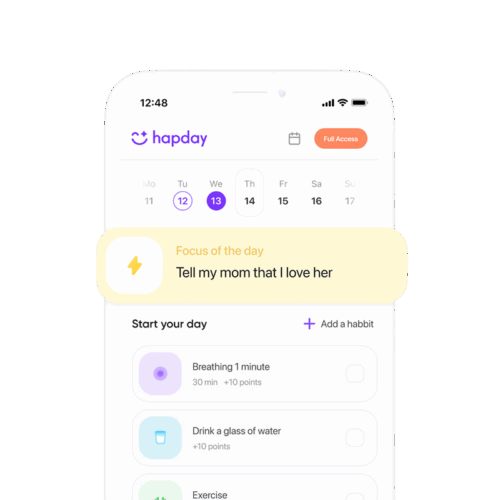
This journey of emotional wellbeing through daily mindfulness isn’t a finish line but an ever-shifting story. It’s about greeting each moment with compassion and curiosity—gently undergoing a change in how you relate to both self and the world. If you’re ready to venture down this path, why not check out tools that can assist on the journey? Hapday AI Life Coach offers guided sessions, habit tracking, and bespoke wellness programs—your helper in embedding mindfulness into life smoothly.
The Bottom Line
Embracing mindfulness is a personal journey toward emotional wellbeing. It is about finding moments of clarity and calm amidst the chaos, leading to a more fulfilling life.
References (Knowledge is power)
- Harvard Health
- Mayo Clinic
- UCLA Health
- American Psychological Association
Join 1.5M+ people using Hapday’s AI-powered tools for better mental health, habits, and happiness. 90% of users report positive changes in 2 weeks.