



Finding Inner Calm: Techniques for Everyday Peace
Table of Contents
- Understanding the Need for Inner Calm
- Embracing Mindfulness as a Gateway: Why It Works
- How to Practice Mindfulness Daily
- The Power of Breathing: Science Behind the Sigh
- Try the 4-7-8 Breathing Technique
- Self-Compassion: The Emotional Anchor
- Cultivating Self-Compassion
- The Role of Gratitude: A Positive Shift
- Daily Gratitude Practices
- Nature’s Peace: Borrowed Tranquility
- Immersing Yourself in Nature
- Conclusion: The Journey to Inner Calm
Key Takeaways
- Inner calm is essential for navigating life’s daily challenges and stressors.
- Mindfulness practices allow us to be present and reduce stress levels.
- Breathing techniques can help balance the body’s response to stress.
- Self-compassion promotes mental well-being and helps manage feelings of inadequacy.
- Gratitude practices enhance happiness and improve perspective on life.
The soft whispers of autumn leaves were carried away by a cold wind, reminding one of the calm that often feels so elusive in today’s fast-paced world. While many find solace in a quiet cup of tea by the window, Ellen’s life had become a digital storm of notifications, deadlines, and a frantic inner dialogue. On one particular evening, overwhelmed by the ceaseless grind, she sought refuge in the idea of peace—a path that, perhaps, you’re considering too. In the chaos we navigate daily, finding that pocket of inner calm isn’t merely a luxury—it’s a necessity.
Understanding the Need for Inner Calm
Let’s be honest—feeling overwhelmed is practically a shared human experience. According to a 2020 study by the American Psychological Association, 75 percent of adults reported moderate to high stress due to work pressures and personal obligations. It’s these relentless daily pressures that underscore the importance of grounding ourselves in inner calm.
“Inner calm isn’t about erasing challenges; it’s about traversing them with clarity and peace.”
— Dr. Sarah Chen, NYU
Imagine finding an anchor in the middle of life’s turmoil, a moment of silence amidst the chaos. How can we cultivate this tranquility in our lives?
Embracing Mindfulness as a Gateway: Why It Works
Mindfulness isn’t just a buzzword thrown around in wellness circles—it’s a powerful tool for inner peace. The essence of mindfulness is being fully present, observing thoughts and emotions without judgment. Back in 2021, Harvard University found that practicing mindfulness significantly diminishes stress by changing how our brains process information.
Mindfulness creates space between action and reaction, allowing for thoughtful responses. Maybe it’s as simple as feeling the solid ground beneath your feet instead of rushing past life’s small, serene moments.
How to Practice Mindfulness Daily
Start small. Dedicate just five minutes to truly observe your surroundings. Maybe it’s the warm sunlight sneaking through your curtains or the peaceful rhythm of a loved one’s breathing nearby. Feel your awareness sharpen. Begin your day with mindful breathing exercises or end it reflecting on the moments that mattered.
The Power of Breathing: Science Behind the Sigh
Ever caught yourself sighing after a stressful moment? Not surprising—it’s our body’s natural mechanism for balancing itself. Breathing exercises activate the parasympathetic nervous system, promoting a “rest and digest” state, countering the stress-induced “fight or flight” response, as noted by Mayo Clinic.
Try the 4-7-8 Breathing Technique
This technique involves inhaling for four counts, holding for seven, and exhaling for eight. It’s easy to integrate into your routine. Perhaps when tension starts to coil, try it and witness how this rhythmic flow helps to untangle your mind.
Self-Compassion: The Emotional Anchor
Take Maya’s story: at 28, the heartbreak of divorce felt insurmountable until she discovered self-compassion. Pioneering researcher Dr. Kristin Neff emphasizes that self-kindness is vital in facing our failures or inadequacies. Her research has shown that self-compassion can significantly ease anxiety and depression.
Cultivating Self-Compassion
When self-criticizing, talk to yourself as you would a dear friend. Transform failure into learning. Write down your fears or criticisms, then respond with understanding. It’s about accepting that you, too, are worthy of the compassion you freely offer others.
The Role of Gratitude: A Positive Shift
In an era of relentless comparison, gratitude becomes the antidote. Dr. Robert Emmons, a prominent figure in gratitude research, found that it can boost happiness by 25% and improve sleep and self-worth.
Daily Gratitude Practices
Start a gratitude journal. List three daily things—even the simple ones, like a steaming coffee or shared laughter. Over time, gratitude shifts your perspective, helping you find peace amid life’s unpredictability.
Nature’s Peace: Borrowed Tranquility
Ever find clarity on a nature walk? Stanford University research shows that time in nature lightens stress and sharpens mental clarity. Nature provides a timeless pause—a chance to align with life’s natural rhythm.
Immersing Yourself in Nature
Seek out a park or trails for walks. Turn off your phone, soak in the sights and sounds, and be present. Bring a book or meditate outdoors, and let nature’s embrace guide you back to your calm center.
Conclusion: The Journey to Inner Calm
Finding inner calm is a journey—a continuous, evolving relationship with peace fueled by intentional practices and choices. Imagine closing each day with the serenity of self-compassion, easy breath, a heart full of gratitude, and clarity from nature’s embrace.
Perhaps you began reading with a burden, resonating with Ellen’s restlessness or Maya’s turmoil. Remember, pursuing inner calm isn’t about muting the world but tuning into a gentler, more serene frequency within it.
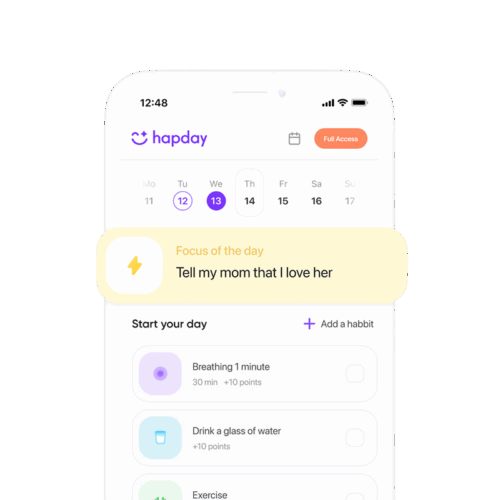
The path to everyday peace involves self-awareness and mindful habits. As you move forward, don’t shy from the steps needed to nurture calm. Why not explore guidance from apps like Hapday AI Life Coach—a 24/7 mentor offering guidance, habit tracking, wellness programs. Embrace a more peaceful you, bit by bit.
The Bottom Line
Grounding ourselves in mindfulness, nurturing self-talk, embracing gratitude, and soaking in nature can forge an effective front against stress. Supported by solid research, these practices—and perhaps tools like Hapday AI Life Coach—will accompany you on your journey toward inner calm.
Join 1.5M+ people using Hapday’s AI-powered tools for better mental health, habits, and happiness. 90% of users report positive changes in 2 weeks.