


Emotional Balance: Your Compass in a Chaotic World
Table of Contents
- The Essence of Emotional Balance
- Discovering Self-Awareness
- Mindfulness: Healing Through Presence
- Building Resilience with Connection
- The Symbiosis of Physical and Emotional Health
- Gratitude: The Antidote to Stress
- A Lifelong Voyage
- The Bottom Line
Key Takeaways
- Emotional balance acts as an anchor in modern life’s chaos, aiding effective emotional engagement.
- Self-awareness is crucial for managing emotional responses and fostering wellbeing.
- Mindfulness practices, like focused breathing, can significantly enhance emotional stability.
- Building and maintaining social connections is essential for resilience and coping with stress.
- Gratitude practices can shift focus to positivity and improve overall emotional health.
The Essence of Emotional Balance
Before we plunge into the mechanics, let’s chew over why emotional balance matters. Picture it as the steady root of a towering oak tree. Without it, we’re swayed by every gust of stress and anxiety.
“Emotional balance is the ability to remain grounded and effective in a full range of emotions.”
— Dr. Sarah Chen, NYU
It’s not always about chasing happiness—it’s about understanding and healthily engaging with emotions.
Research backs this up. The American Psychological Association highlights that individuals adept at emotional regulation report lower anxiety and depression levels, healthier relationships, and, frankly, more fulfilling lives. We’ve heard it said a million times, but it still rings unequivocally true.
Discovering Self-Awareness
Self-awareness stands as the cornerstone of emotional wellbeing. Know yourself, right? Without it, managing emotional responses becomes a herculean task. Just look at Maya, a 28-year-old navigating the aftermath of a divorce. She faced an emotional tempest but found a lifeline in journaling.
“Putting pen to paper slowed my whirlwind of thoughts, helping me make peace with them.”
— Maya, 28
Journaling’s Secret Sauce
Harvard University’s research indicates journaling not only alleviates stress but also fosters clarity. Through journaling, you can capture the untamed landscape of your mind, helping to tame what once felt chaotic.
Getting Started
Begin by spending a few minutes daily writing freely about your thoughts and feelings. Forget about grammar; just write. Try prompting with questions like:
- How do I feel today?
- What needs more attention in my life?
Mindfulness: Healing Through Presence
Mindfulness is your ticket to emotional stability, providing an oasis amidst the chaos. Imagine the craziness of the world fading as you anchor yourself to the present. By observing without judgment, you create a safe haven in your mind for emotional balance.
The Brain on Mindfulness
Studies, including one in Psychiatry Research, show mindfulness alters brain structures tied to learning, memory, and emotional regulation. So, it’s not just feel-good fluff; it changes you from the inside out.
Practicing Mindfulness
A good starting point is focused breathing. Spend just a few minutes each morning on intentional breaths—inhaling, holding, and exhaling slowly. This simple act is a touchstone for calm, nudging intrusive thoughts aside gently.
Building Resilience with Connection
Human contact is vital for emotional health. Let’s face it, life can knock you down, but a sturdy support network cushions the fall. For Maya, friends and family were crucial in piecing her life back together post-divorce.
The Buffer Effect of Social Ties
Turns out, social connections can buffer against stress. A study in Social & Personality Psychology Compass found that these relationships enhance our ability to cope and foster resilience.
Strengthening Your Network
Connection means effort—schedule regular hangouts, call your parents, join groups that interest you. It’s the glue that will hold you together when life tries to pull you apart.
The Symbiosis of Physical and Emotional Health
Body and mind—an age-old duo that’s inseparable in fostering emotional stability. Exercise, sleep, and balanced diet might sound cliché, but they’re pillars you can’t ignore.
Moving for Mental Health
Physical activity releases endorphins, those fantastic ‘feel-good’ hormones. The CDC confirms exercise curtails stress and combats anxiety and depression. So, why not suit up for a dance class or lace those running shoes?
Incorporating Movement
Choose any activity that delights you. Allot time each week for it—150 minutes of moderate exercise is the sweet spot. Routines provide reliability amidst life’s unpredictability.
Gratitude: The Antidote to Stress
Gratitude expands your lens, spotlighting positivity and easing stress. It can unseat corrosive emotions like resentment and envy.
Perspective is Everything
A Journal of Personality and Social Psychology piece confirms gratitude promotes strong relationships and greater health. Simple, yet profoundly transformative.
Practice the Attitude of Gratitude
Begin a gratitude journal. Each day, jot down three things—be it that perfect cup of coffee or a cherished friend. Realigning your focus monumentalizes the positives while minimizing life’s petty irks.
A Lifelong Voyage
This isn’t about mastering life’s challenges in one go. Emotional balance is about cultivating tools and habits for navigating the swells with poise and strength.
Through self-awareness, mindfulness, genuine connection, physical health, and gratitude, you can create your haven of serenity even amid chaos. As you implement these practices, you’ll feel more anchored and present. Your path to emotional wellness is a profound journey—one that promises a life where external noise fades, letting your inner peace resonate.
The Bottom Line
Emotional balance isn’t a destination; it’s an ongoing journey. By embracing self-awareness, practicing mindfulness, fostering connections, prioritizing physical health, and adopting gratitude, you can navigate life’s challenges with greater ease and serenity. Begin today and create your path toward emotional wellness.
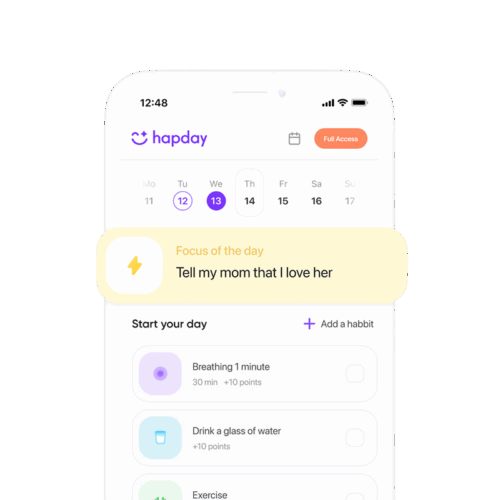
**Embarking on your journey to emotional wellness? Discover Hapday AI Life Coach for custom guided sessions and habit tracking tailored to sustain your emotional wellbeing.**
Join 1.5M+ people using Hapday’s AI-powered tools for better mental health, habits, and happiness. 90% of users report positive changes in 2 weeks.