

Mindful Breathing: Your Anchor in the Storm
Table of Contents
- Understanding Mindful Breathing
- The Science of Breath and Calm
- How to Practice Mindful Breathing
- The Psychological Benefits of Mindful Breathing
- Bringing Mindful Breathing Into Your Day
- Overcoming Common Obstacles
- The Power of Mindful Breathing in Modern Life
- Conclusion
Understanding Mindful Breathing
So, what is this mindful breathing thing anyway? Well, it’s the act of drawing your full attention, your awareness, to the rhythm of your breath as it flows naturally in and out of your body. Sounds too simple to be powerful, right? Yet, it’s this simplicity that makes it a gentle but mighty tool to steady yourself amidst the world’s clamor.
“Breathing is automatic, yes, but when we give it our attention, it transforms into a conduit for peace.”
— Dr. Michael Brown, Stanford University
The Science of Breath and Calm
Why is mindful breathing such a game-changer for inner peace? Well, let’s dive into the science. By engaging in slow, intentional breathing, you’re calling upon the parasympathetic nervous system—it’s nicknamed the “rest and digest” system—helping to balance the stress-induced “fight or flight” response.
A Harvard study, back in 2021, highlighted how consistent mindful breathing practices can reduce heart rate and lower blood pressure while calming the amygdala, the emotional core of your brain, thus diminishing anxiety and elevating mood. It’s not just theory—it’s science-backed reality.
How to Practice Mindful Breathing
Starting off on this journey isn’t about being faultless. It’s about presence over perfection. Here’s how you can begin:
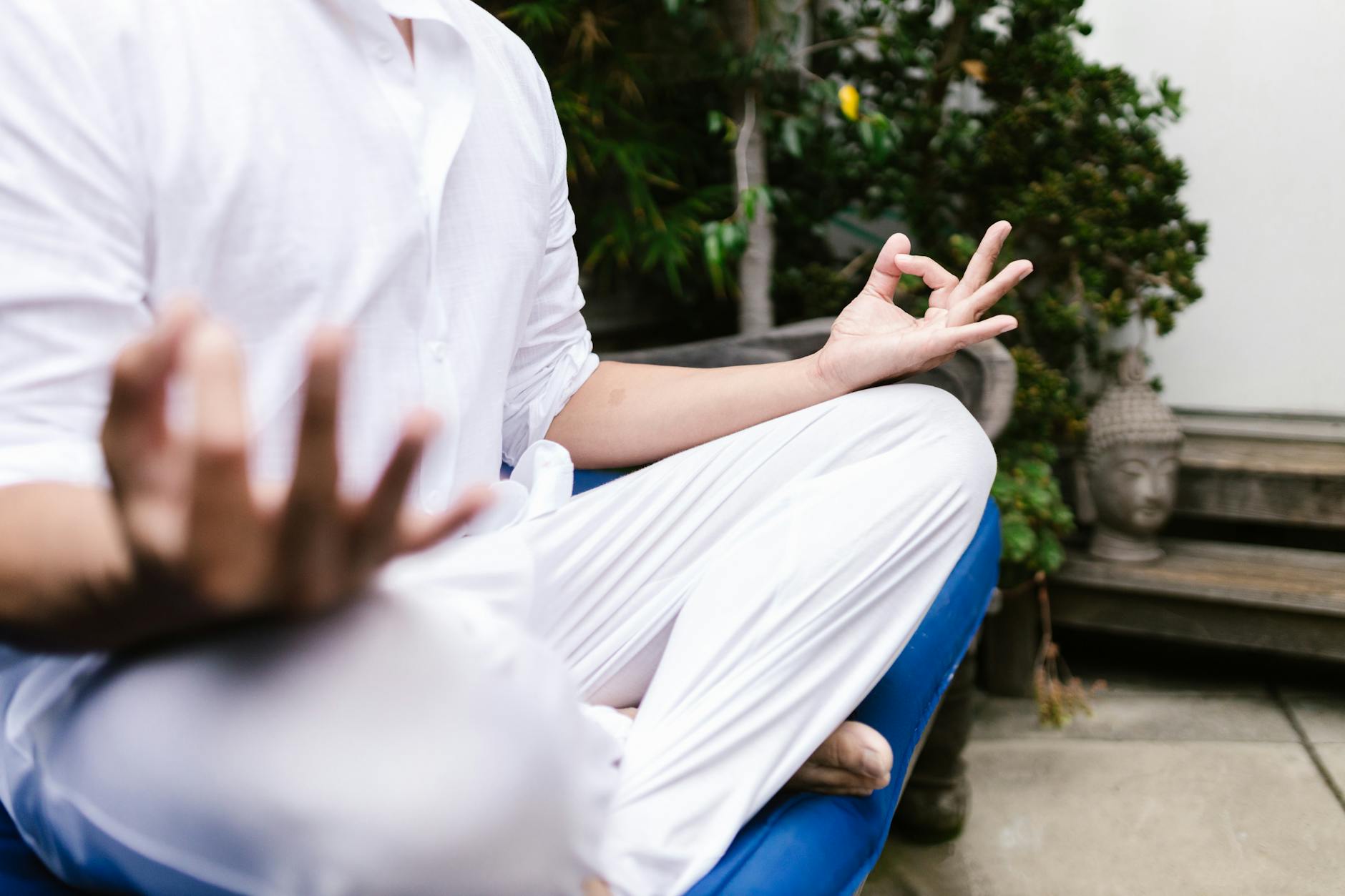
- Find a Quiet Space: Settle into a comfortable position—whether sitting or lying down. Close your eyes if that feels natural, and allow yourself to just be.
- Watch Your Breath: Notice each breath as it enters and leaves your body. Feel how it caresses your nostrils or how your chest subtly rises and falls.
- Integrate a Counting Rhythm: Try inhaling to a count of four, hold it, then exhale to the same count. The rhythm’s flexible; adjust to what feels right for you.
- Cultivate Non-Judgmental Awareness: Thoughts will arise; they always do. Acknowledge them kindly, and gently return your focus to your breath.
Maya, 28, knows this well. After her divorce, nights were often stolen by restless thoughts.
“Mindful breathing was a lifeline,” she recalls. “It was the anchor in my chaos, a way to reclaim my inner calm.”
— Maya
The Psychological Benefits of Mindful Breathing
Mindful breathing goes beyond fleeting calm. Dr. Emily Zhao at NYU explains it fosters a meaningful reconnection with oneself, aiding emotional regulation and clarity during emotional processing.
According to the American Psychological Association, mindfulness—especially focused on the breath—can markedly diminish symptoms of generalized anxiety disorder while building emotional fortitude. It’s powerful stuff.
Bringing Mindful Breathing Into Your Day
No need for rituals or prep work—mindful breathing is at your fingertips, wherever you are. Here’s how to weave it into your life:
- Morning Ritual: Start your day with mindful breathing before the chaos kicks in.
- During Transitions: Use it at the juncture between tasks to reset your focus.
- In Tense Moments: It’s a game-changer. When tension builds, a mindful breath can change your whole outlook. Sam found this out firsthand under the high pressure of a new job: that pause, that breath, allowed him to approach work with newfound calm.
Overcoming Common Obstacles
Feeling like you’re not quite getting it? That’s entirely natural. Mindful breathing is like nurturing a delicate plant; it thrives on patience and regularity. Don’t chase perfection; cherish each moment of presence instead.
Even the most experienced practitioners face turbulent minds at times.
“Consistency, not flawlessness, is the key. With time, it becomes second nature.”
— Dr. Chen
The Power of Mindful Breathing in Modern Life
In a frenetic world pushing us to move faster, the practice of mindful breathing invites us to pause and reconnect with life’s essential rhythms. Through breath, we build a sanctuary of calm to retreat to whenever we choose.
Perhaps you’re wondering, “What if I embrace this, and my world stays the same?” But—take a breath. Let the question dissolve in the steady cadence of your inhales and exhales. Within those breaths lies a quiet power, capable of supporting you through whatever life throws your way.
Conclusion
So, as you take another mindful breath, reflect on the profound simplicity of this act. It’s more than just survival—it’s a bridge that leads back to your center, to calm and clarity. By integrating these moments of mindful breathing, you’re nurtured, one breath at a time.
Key Takeaways
- Mindful breathing is a powerful tool for grounding oneself amidst daily chaos.
- It engages the parasympathetic nervous system, aiding in relaxation and stress reduction.
- Practicing mindful breathing can lead to emotional regulation and clarity.
- Incorporating mindful breathing into daily routines enhances overall well-being.
The Bottom Line
Mindful breathing is more than just a practice; it’s a lifeline to inner calm and clarity, allowing you to navigate the complexities of modern life with resilience and grace. Embrace the simplicity of each breath and discover the profound impact it can have on your well-being.
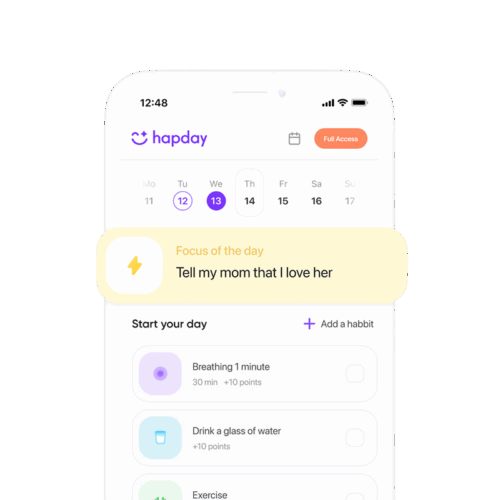
Eager to take your mindfulness journey further? Discover the Hapday AI Life Coach—a path personalized for your wellbeing. With guided sessions and tools for habit tracking, it’s your companion to cultivate a balanced, fulfilling life. Explore more with Hapday AI Life Coach.
Join 1.5M+ people using Hapday’s AI-powered tools for better mental health, habits, and happiness. 90% of users report positive changes in 2 weeks.